
Astronomer; chair of astronomy at Ohio State and Northwestern. The US Air Force's own scientific consultant to Project Sign (1948), Project Grudge, and Project Blue Book (1952–1969). He began as a skeptic, became the most credentialed scientific advocate for serious study, devised the classification still in use today, and founded the Center for UFO Studies.
"It is very important to remember that the 'raw materials' for the study of the UFO phenomenon are not the UFOs themselves but the reports of UFOs."The Hynek UFO Report, 1977
The report is the datum, not the object
The phenomenon can only be studied through documented reports and their circumstances. The unit of evidence is the record, the founding premise of any document-first investigation.
A hard residue survives debunking
As the Air Force consultant he explained most cases as meteors, planets, and balloons. But about one in five of the Project Sign reports resisted every conventional explanation.
Witness caliber is the key variable
A report's weight depends on the training and reputation of the observer. Pilots, officers, and technical personnel produce a different class of datum than a casual passer-by.
The phenomenon is classifiable
He sorted reports into stable categories, from Nocturnal Lights and Daylight Discs to Radar-Visual cases and Close Encounters, each scored for Strangeness and Probability.
The corpus is the residue he was told did not exist, now declassified
For two decades inside the government's own investigation, Hynek argued three things: that a genuine unexplained residue survived rigorous debunking, that radar-visual cases with credible witnesses were its hardest core, and that the Air Force was suppressing the best material behind classification while dismissing it in public. The corpus vindicates all three structurally. It is dominated by radar-visual military reports filed by named, reliability-vetted observers through official channels, the exact category he said existed and was being hidden. Tranche 5 sharpened this from structural agreement to something closer to documentation: the founding file of Project Sign, the programme Hynek was hired onto, contains both the admitted residue and the decision to withhold it from the press, written in 1948. What the corpus cannot do is confirm his later inference that the residue points to a non-human intelligence. It catalogs the unexplained; it does not explain it.

Computer scientist and astrophysicist. Co-developer of the first computerized map of Mars. Author of Passport to Magonia and The Invisible College. Consultant to Hynek's original UAP study. He spent decades demanding access to unedited, multi-sensor government data, arguing it would confirm what civilian records implied.
"The theory that flying saucers are material objects from outer space manned by a race originating on some other planet is not a complete answer."Passport to Magonia, 1969
Multi-sensor confirmation is the gold standard
Cases tracked simultaneously by radar, infrared, and visual observation with no sensor disagreement are the strongest physical evidence. He built classification matrices for them specifically.
Instant acceleration violates known aerodynamics
Stationary to supersonic with no acceleration phase, no sonic boom, no ionization trail. He catalogued dozens of such cases, none with a conventional explanation.
Nuclear sites show disproportionate clustering
His data compilations noted UAP reports cluster around electromagnetic infrastructure, especially nuclear facilities. He flagged Kirtland and Sandia repeatedly as statistically anomalous.
Government data is the missing variable
The main obstacle to resolving the question was the absence of unedited government sensor data. He requested raw radar logs, flight-recorder correlates, and multi-agency incident records.
The corpus is what Vallée asked for, and it says what he predicted
Vallée spent five decades demanding unedited multi-sensor government data, arguing it would reveal a statistically consistent pattern that conventional explanations could not accommodate. The corpus is, essentially, that dataset. The multi-sensor cases fit his anomaly-classification matrices precisely. The Sandia nuclear clustering he inferred from civilian data is confirmed in primary documents. His framework is not falsified by the corpus. If anything, it is the analytical lens that fits the data most closely.
Vallée's deeper argument, that the phenomenon is not simply nuts-and-bolts extraterrestrial visitation but something stranger, is a reading of the pattern, not a property of the documents. The corpus confirms his data instincts. It does not adjudicate his metaphysics.
Vallée's control-system conjecture predicts that what gets reported should co-vary with the observer. The FBI supplied something close to a controlled trial of exactly that: two renderings of the same objects on the same night, one as the naked eye saw them (dull red dashes) and one through night optical devices (circles with the halo an intensifier produces). The same interview records one witness seeing dashes where the man beside him saw triangles, and attributes it to astigmatism. Reported form varying with the instrument, demonstrated inside a single event rather than inferred across decades.
The complication is that this is equally the best evidence for the deflationary rival Vallée's framework has always had to outrun: that shape reports are artefacts of sensing, and no control system is required to explain them. The same tranche also closed three cases outright, including a 1963 Brazilian crash claim run to ground as fabricated in twelve days. A phenomenon that keeps resolution permanently out of reach should not permit that. The corpus continues to fit his data instincts; it has begun to supply ammunition to the cheapest explanation of them.
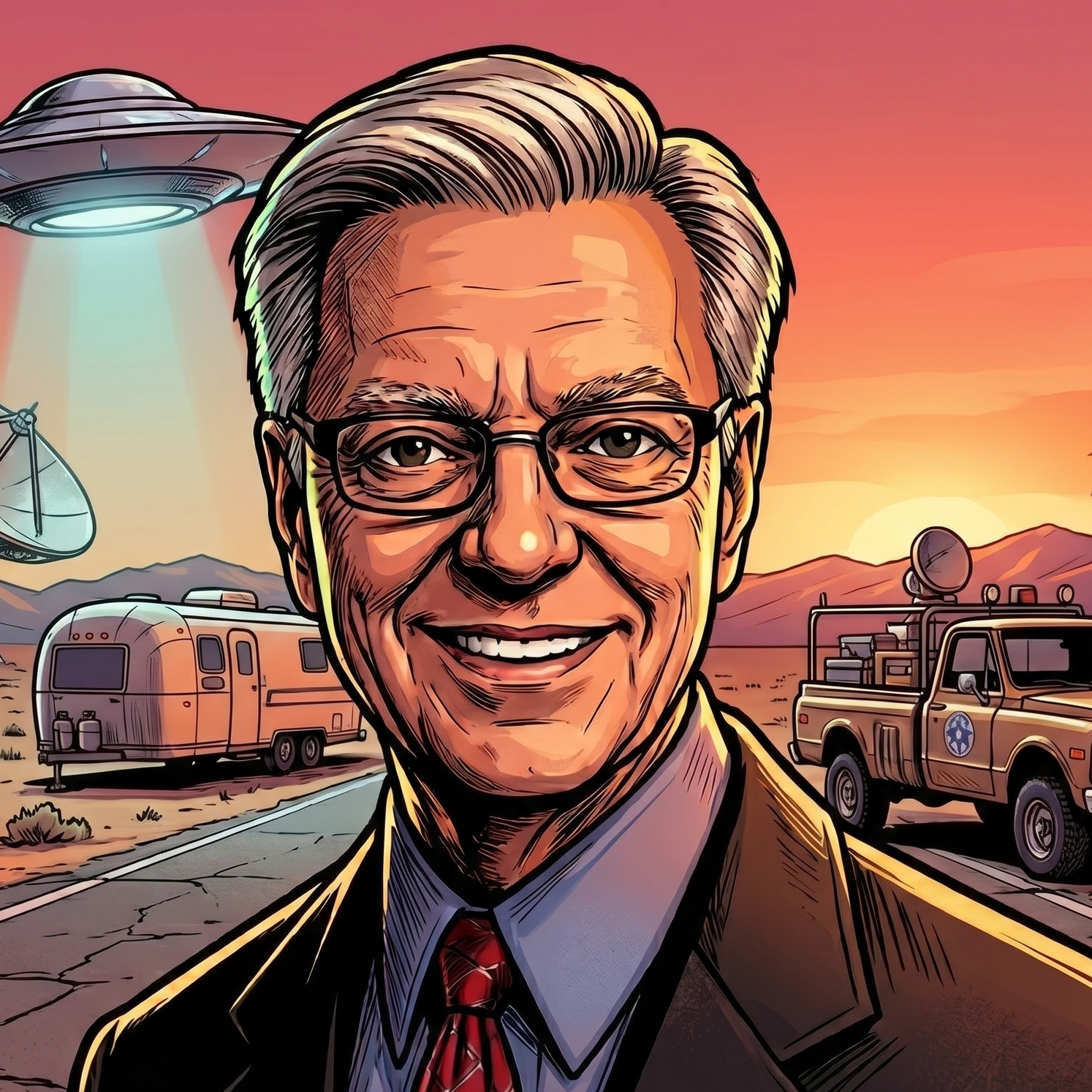
Theoretical physicist. Director of the Institute for Advanced Studies at Austin. Core scientist for the Pentagon's AAWSAP and AATIP programs. Published extensively on zero-point energy and metric engineering as applied to exotic propulsion.
"This approach could profit by incorporating elements of a more forensic 'gumshoe' style, as in criminalistics and intelligence work."Hal Puthoff, "Ultraterrestrial Models," Journal of Cosmology
No propulsion signature
Genuinely exotic craft should show no exhaust plume, no control surfaces, and no rotor or jet acoustics, because they are not moving by conventional reaction thrust.
Transmedium operation
The hardest constraint: objects that cross air, water, and space without the impact or structural penalty any known vehicle would suffer at the boundary.
Environmental electromagnetic effects
A craft using field-based propulsion should leave electromagnetic disturbances on nearby sensors and systems, not just an optical track.
Metric engineering as the fitting physics
If the kinematics are real, the candidate explanation is spacetime or inertial-mass engineering rather than any propulsion in the current catalogue.
The engineering signatures he predicted are in the sensor data
Puthoff's framework makes specific, falsifiable predictions: no propulsion signature, environmental electromagnetic effects, transmedium operation, and kinematics requiring physics outside the current catalogue. Three of the four are documented in primary sources, and Tranche 5 strengthened two of them, supplying both an instrumented no-propulsion case and the only occasion on which the government computed the accelerations itself. The fourth, transmedium operation, is the weakest-supported claim about any analyst on this page: it rests on two uploader-assigned video titles with unverified provenance and no mission report. That is worth stating plainly, because transmedium behaviour is the constraint Puthoff treats as hardest to explain away, and the release does not deliver it. What the corpus cannot do, even where it agrees with him, is distinguish metric engineering from simpler unknowns. The framework is not falsified. It is also not proven.
A signature consistent with exotic physics is also consistent with sensor artifacts, classified terrestrial technology, or measurement error. Puthoff himself argued for forensic caution. The corpus rewards the caution and withholds the conclusion.
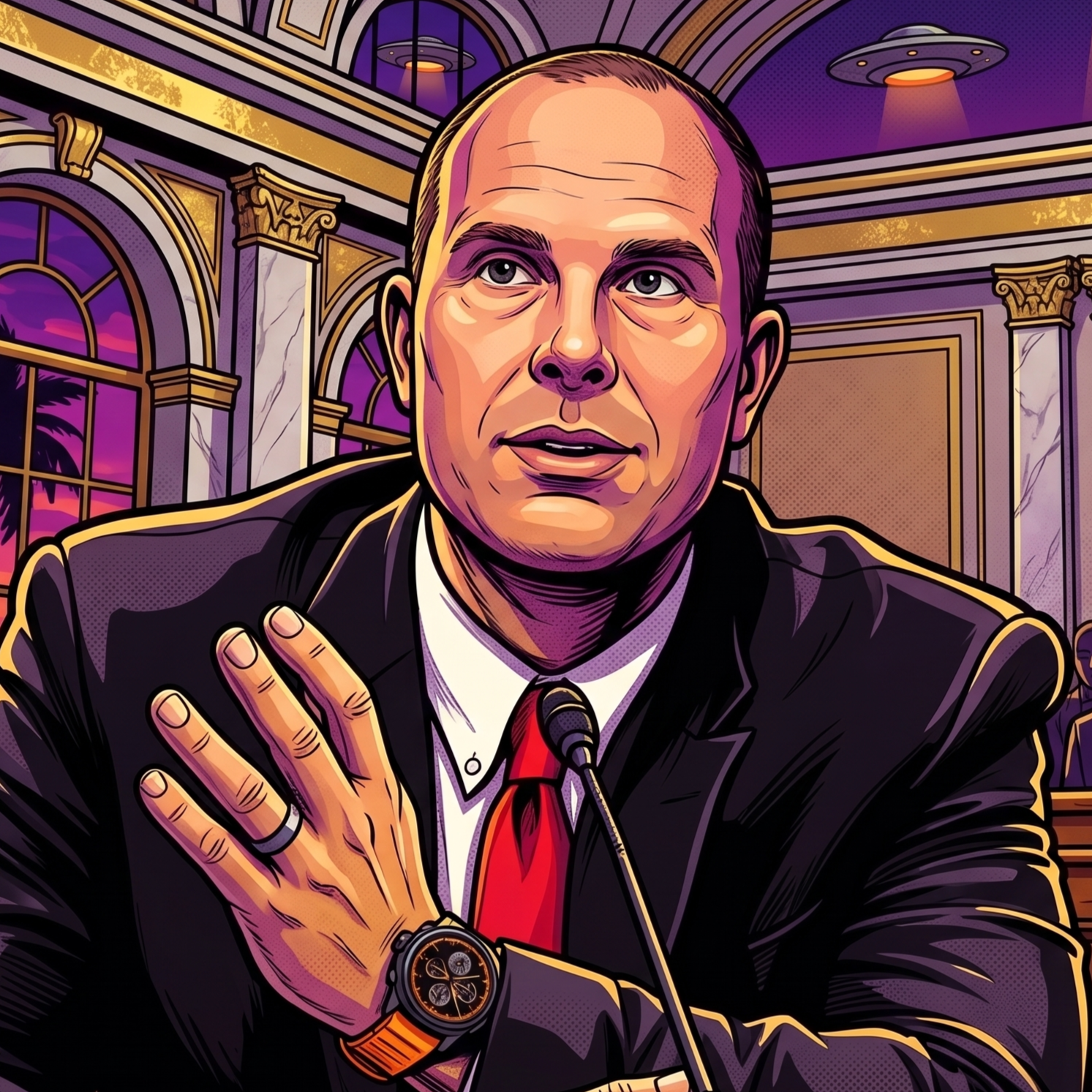
Former NGA and NRO officer; UAP Task Force representative. Testified before Congress under oath in 2023. His claims are explicitly bureaucratic and institutional rather than theoretical, which makes them the most directly checkable against a paper trail.
"The U.S. Government is operating with secrecy above congressional oversight with regards to UAPs."David Grusch, sworn testimony, House Oversight Committee, July 26, 2023
A compartmented program exists outside oversight
He testified to a multi-decade effort kept from the committees legally entitled to see it, the structural claim at the center of his complaint.
Multiple agencies hold UAP material
He named specific bodies, ODNI, the Department of Energy, and the DIA among them, as holders of records, a claim the document sources can be checked against.
One incident is routed across agencies
Compartmentalization shows up as the same event appearing in parallel file chains, with no single agency holding the whole record.
Disclosure itself is managed
He argued the release of information is controlled as deliberately as its concealment, which makes the manner of each tranche part of the evidence.
The institutional architecture he described is partially visible in the paper trail
Grusch's claims are the most verifiable here because they are explicitly about structure, and they are the only ones the corpus can partly refute as well as support. Two of the three agencies he named, ODNI and the Department of Energy, do appear as document sources, and the release carries the first primary-source ODNI UAP document in the public domain. The third, the Defense Intelligence Agency, does not appear in the release at all. That is not evidence he was wrong, since a compartmented holding is precisely what would not be released, but a page that counts the hits owes the reader the miss. The interagency routing does suggest the cross-compartment management he described. What the corpus does not yet provide is a direct link between routing codes and the specific legacy programs he alleged. It is an incomplete but directionally consistent fragment of the paper trail he said existed.
Confirming the architecture is not confirming the cargo. The corpus supports Grusch on compartmentalization and agency involvement. It says nothing, either way, about his most dramatic claims of recovered craft and non-human biologics, which remain testimony-of-testimony.