What makes a document “key”?
Most redaction in this collection hides ordinary things, mainly the names of aircrew and witnesses. A document becomes worth pursuing only when the blacked-out material is substantive: withheld for national security, or excised under one of the formal classification categories that protect military operations and installations.
The redaction analysis scored every document for exactly that. Thirty-five of those came back carrying substantive redaction. The seven below carry the most, and because each is a single, precisely numbered report, each is a realistic target for a formal declassification request. The black boxes on the images throughout this page are the redaction itself.
The shape of the wall
Before the target list: the redaction itself can be measured. Every removal carries a public legal code saying why the passage was withheld, so the shape of a secret can be read without ever seeing inside it. Across the Tranche 1 corpus there are 791 exemption markers.
Triage, most of the redaction hides nothing substantive
Every FOIA-exemption marker, split by what it protects. Personal-privacy redactions ((b)(6)/(b)(7)) hide aircrew and witness names. National-security redactions ((b)(1)/(b)(3)) hide substance.
(b)(6)+(b)(7) · 359 markers
(b)(1)+(b)(3) · 432 markers
The wall is operational, not sources-and-methods
The declared reason material is secret, under the E.O. 13526 classification categories. This category mix is the single most diagnostic result.
The priority seven
The documents with the densest substantive redaction. Each is ranked by a target score that weighs the volume and type of what was withheld.
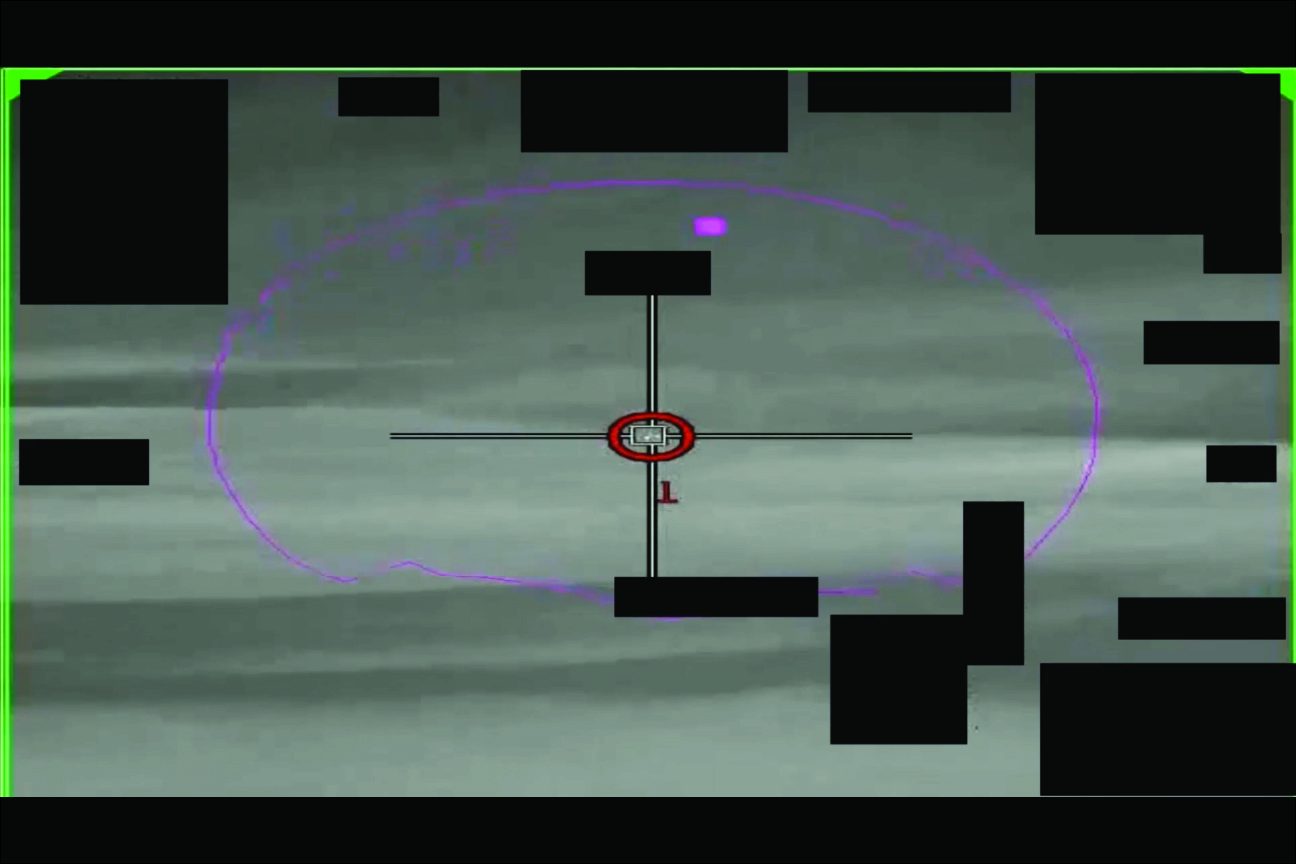
Mission Report: Arabian Gulf, 2020
This is the single most heavily redacted document in the collection. It carries 64 national-security redactions, 19 statutory withholdings, and 62 operational classification markings, a concentration nothing else comes close to. What sits behind that wall is the operational substance of a 2020 Arabian Gulf encounter: what the aircrew were tasked to do, what their sensors recorded, how the object behaved, and where it happened. Because it is a single, precisely identifiable report with its own tracking number, it is the cleanest target in the collection for a formal declassification request.
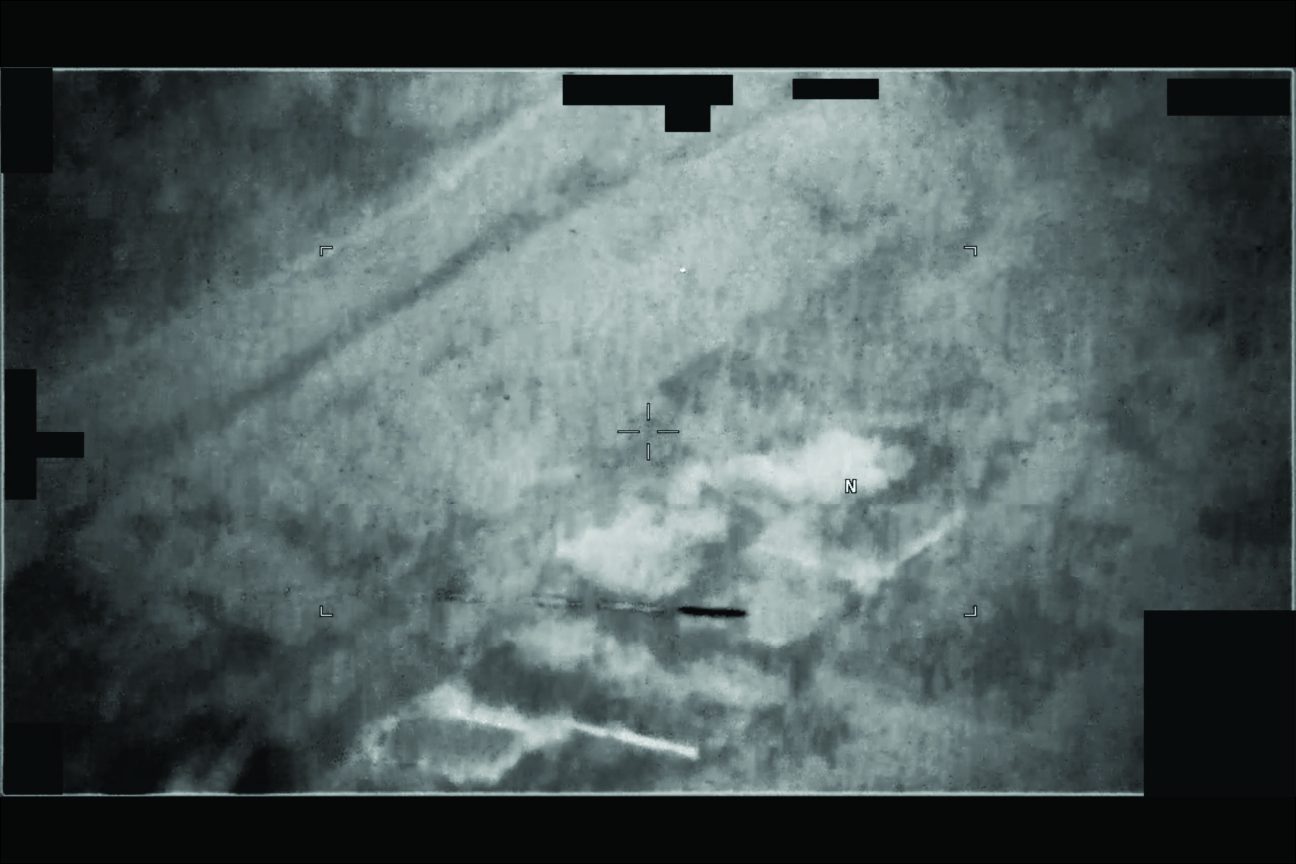
Mission Report: Syria, October 2024
One of the most recent reports in the collection, and one of the most redacted, with 59 national-security redactions and 42 operational markings. It was released to the government’s UAP office in October 2025, then redacted on the way out. It also carries five 1.4(g) markings, a category reserved for the vulnerabilities or capabilities of installations and infrastructure. That suggests part of what is hidden is not about the object at all, but about what it was near.
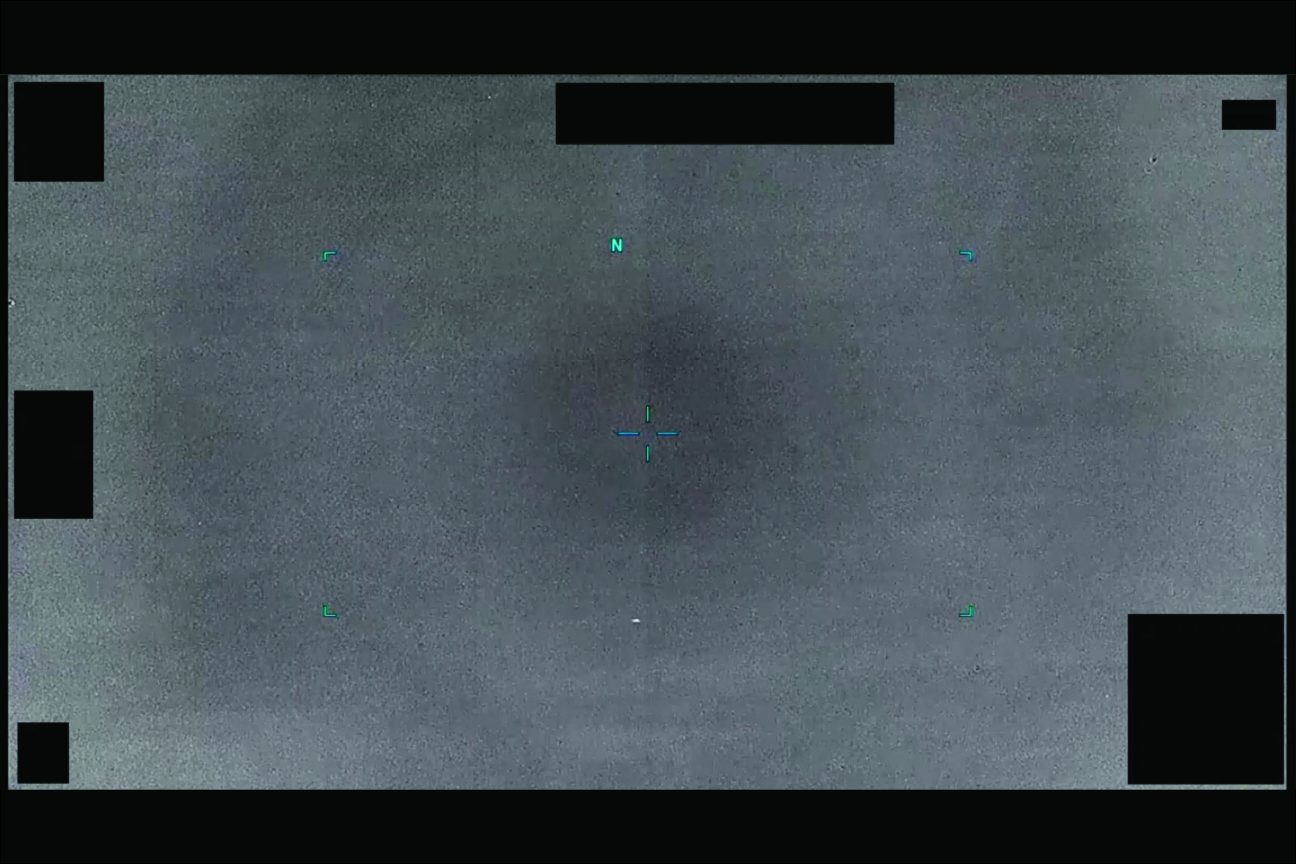
Mission Report: Greece, January 2024
Greece is one of the densest single-region clusters in the modern record, and this is its most redacted entry, with 42 national-security redactions and 32 operational markings. The Greek operating-area reports arrived together in the 2025 release wave, several of them describing incidents only weeks apart. What is withheld here is the operational detail that would let an analyst tell whether those clustered Greek incidents were one recurring thing or several different ones.
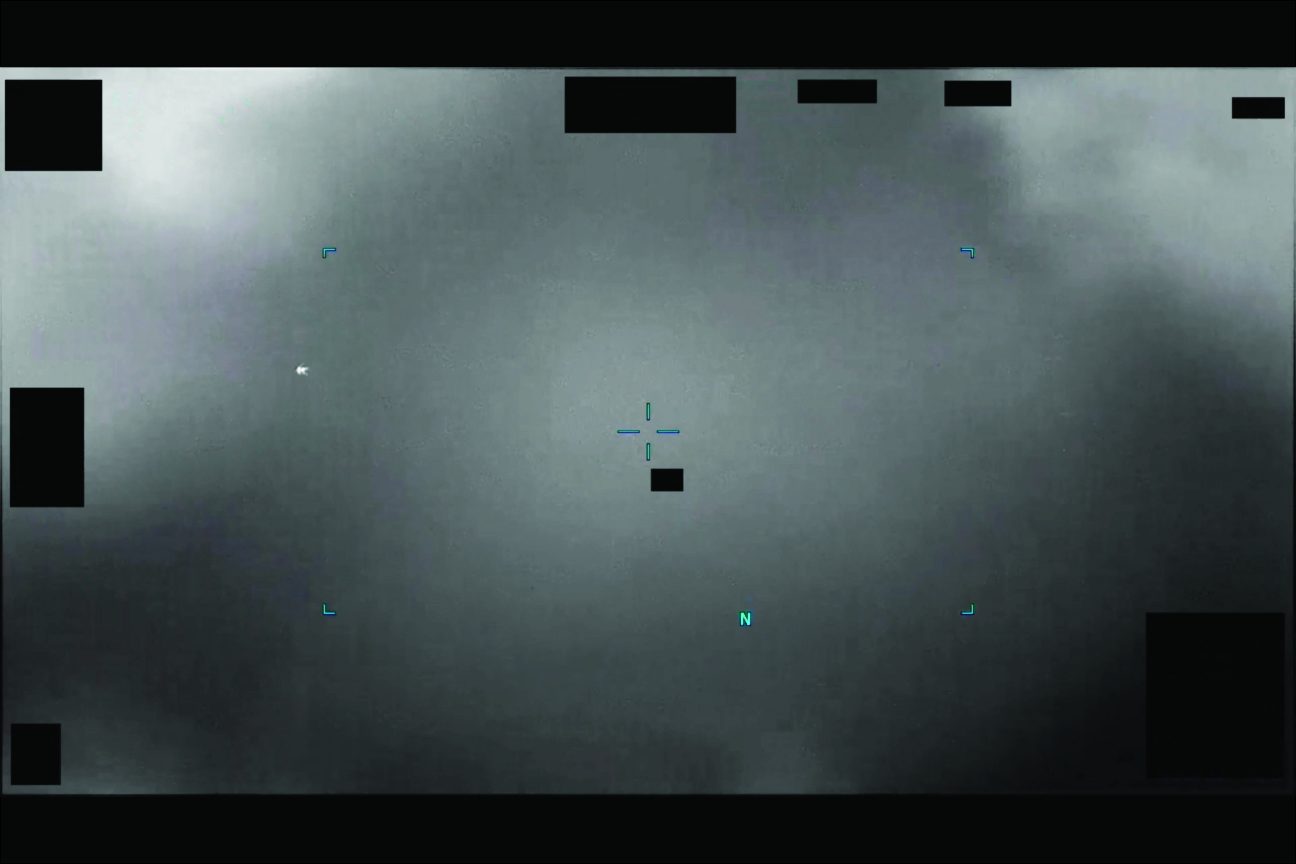
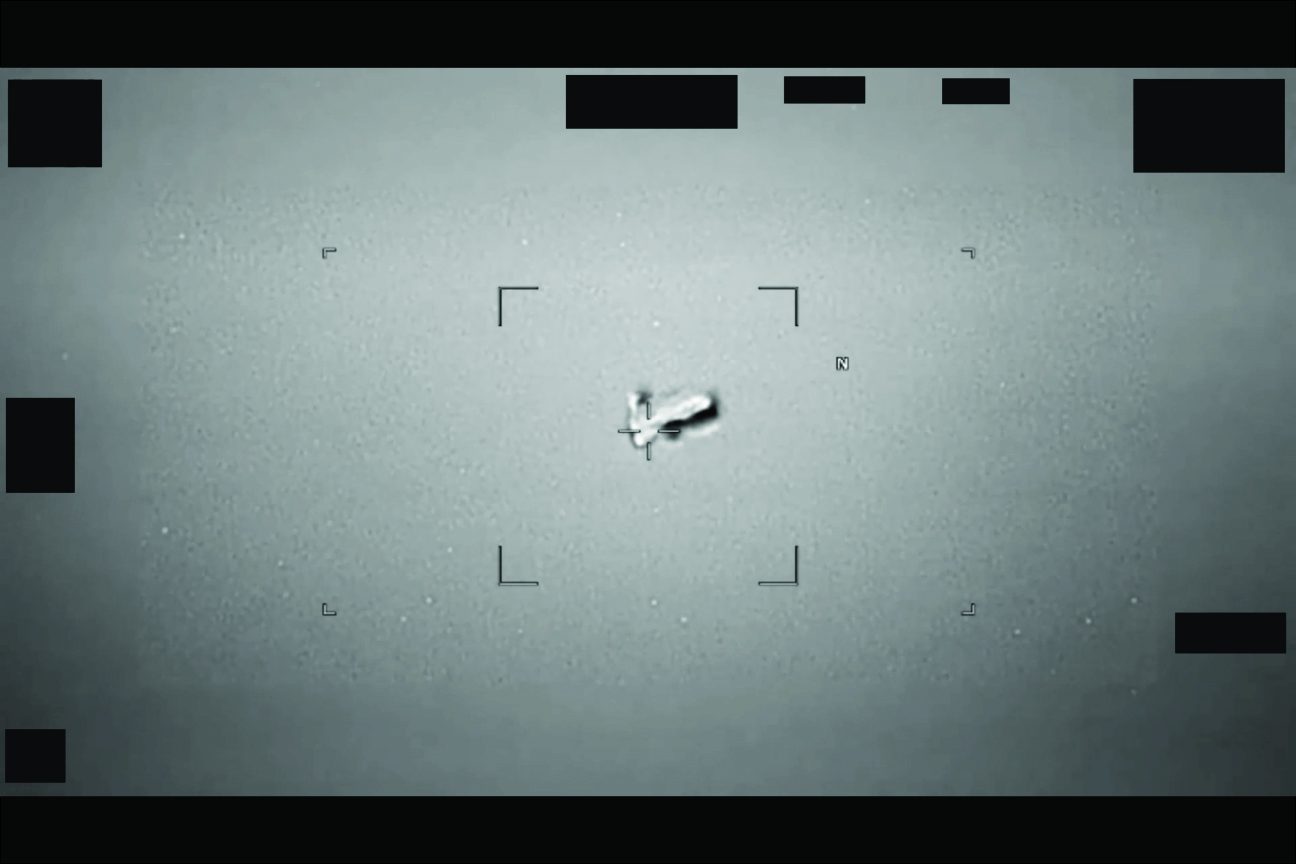
Mission Report: United Arab Emirates, October 2023
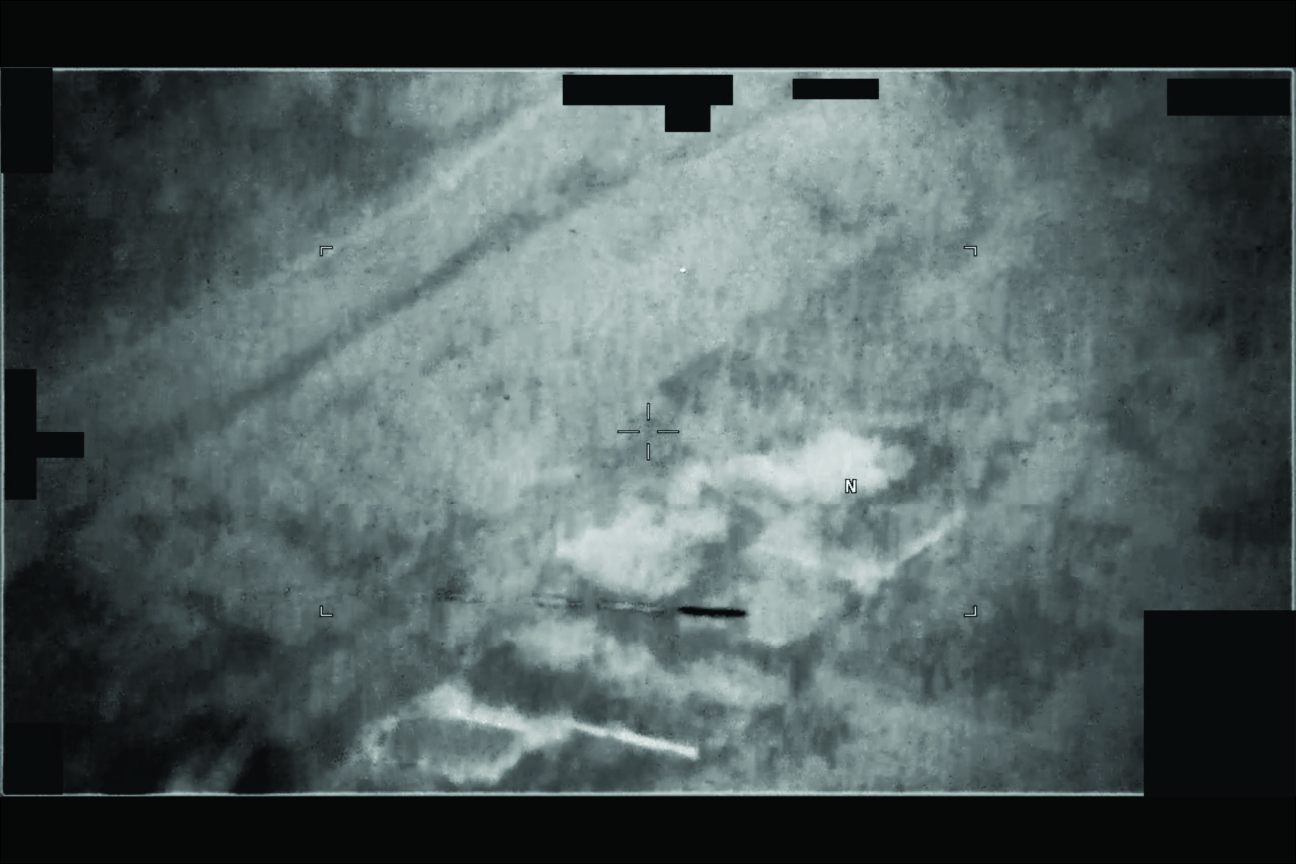
A UAE-theatre report carrying 42 national-security redactions and 28 operational markings. It pairs well with the image alongside it. That sensor still is from the same country and the same month, so it shows the kind of contact this report logs, and the kind of black redaction boxes that sit over the data this page is trying to recover.
Mission Report: East China Sea, 2024
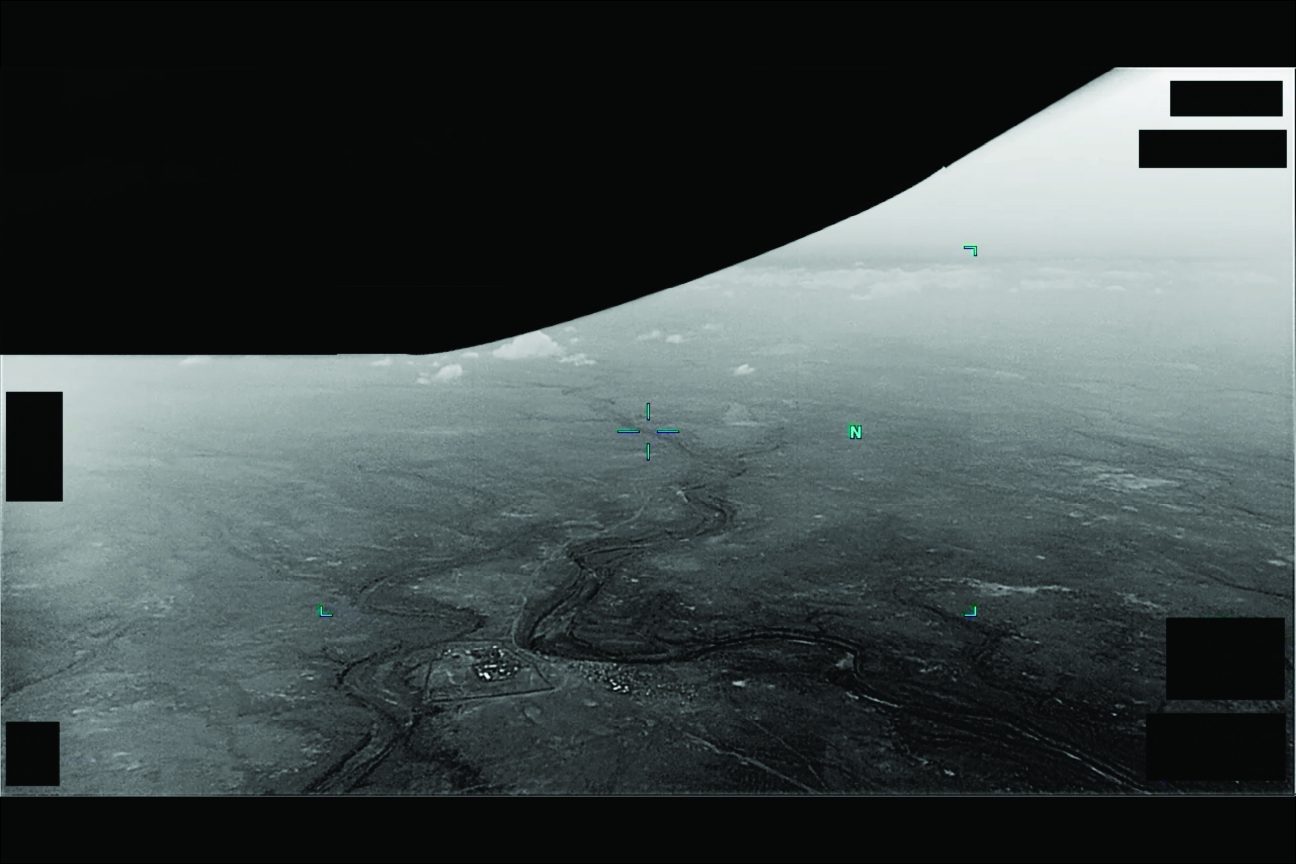
The Indo-Pacific entry on the priority list, and the one that breaks the pattern. Almost every other heavily redacted report comes from US Central Command’s Middle East theatre, but this one is from the East China Sea. It carries 35 national-security redactions and 23 operational markings. Its value is partly comparative, since it lets you ask whether the redaction practice is uniform across theatres, or whether the Pacific is handled differently.
Mission Report: Gulf of Aden, July 2024
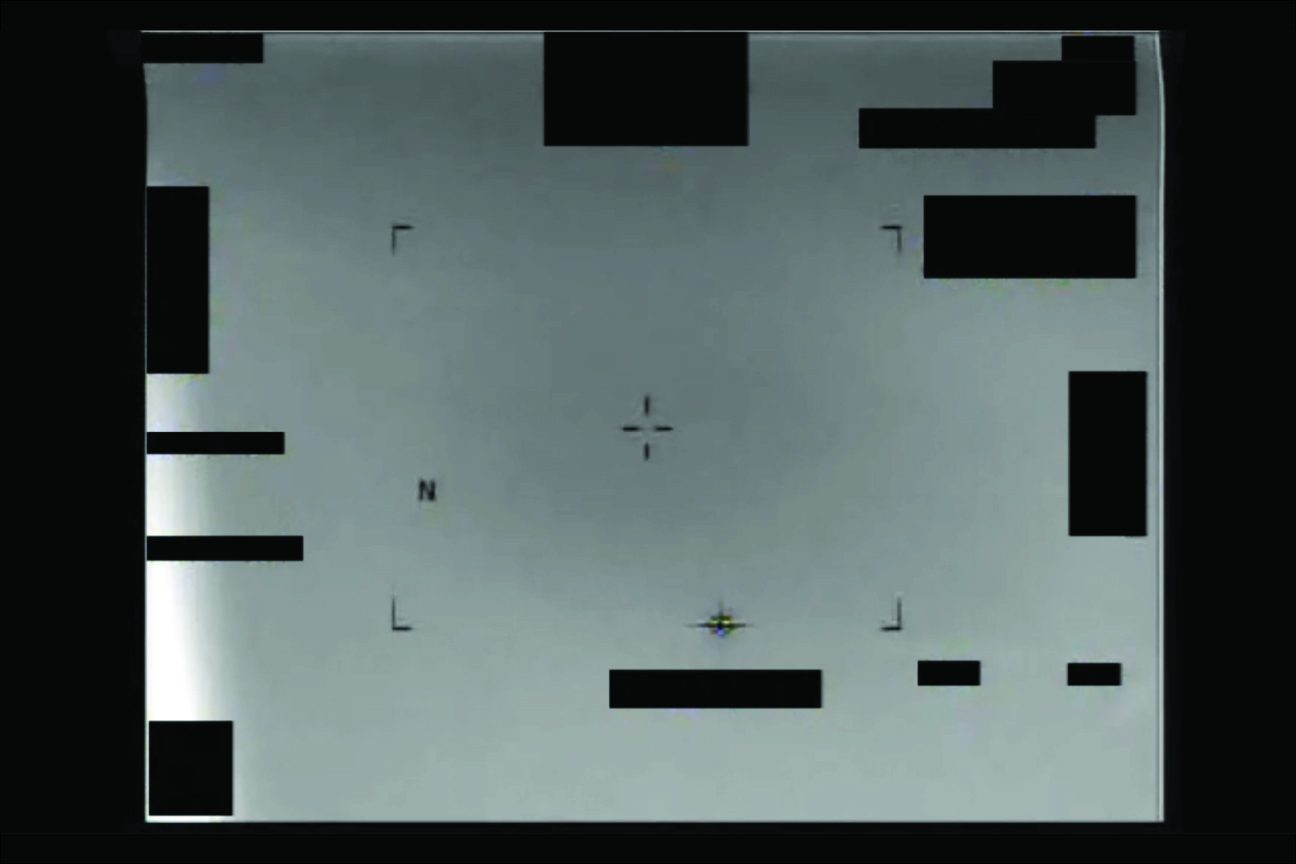
Like the Syria 2023 report, this one is redacted almost entirely through operational classification, with 94 operational markings and no national-security redactions. It also carries the highest count of infrastructure-vulnerability markings in the collection, 15 of them. Read together, those two facts suggest a report whose sensitive content is heavily about place: what installations or capabilities the encounter occurred near, as much as the object itself.
Mission Report: Syria, November 2023
This report has the highest count of operational classification markings in the collection, 98 of them, yet not a single national-security (b)(1) redaction. That is a different kind of redaction. The content was not blacked out passage by passage; it was excised wholesale under the operational-classification category. Documents like this one are the clearest evidence for the site’s central finding, that the wall is built as operational security rather than the protection of an intelligence secret.
All 35 substantive-redaction documents
Every document carrying substantive (non-name) redaction, ranked by target score. The seven priority documents are highlighted. Click any column heading to re-sort.
| # | Document | Agency | (b)(1) | (b)(3) | 1.4a | 1.4g | Score | Opens |
|---|---|---|---|---|---|---|---|---|
| 1 | dow-uap-d3-mission-report-arabian-gulf-2020 | DEPT of DEFENSE | 64 | 19 | 62 | 0 | 181 | 2048-06-03 |
| 2 | dow-uap-d32-mission-report,-syria-october-2024 | DEPT of DEFENSE | 59 | 4 | 42 | 5 | 148 | 2049-10-20 |
| 3 | dow-uap-d25-mission-report-greece-january-2024 | DEPT of DEFENSE | 42 | 4 | 32 | 4 | 108 | 2049-01-25 |
| 4 | dow-uap-d27-mission-report-united-arab-emirates-october-2023 | DEPT of DEFENSE | 42 | 4 | 28 | 4 | 106 | 2049-06-06 |
| 5 | dow-uap-d28-mission-report-east-china-sea-2024 | DEPT of DEFENSE | 35 | 4 | 23 | 5 | 90 | 2049-09-21 |
| 6 | dow-uap-d75-mission-report-gulf-of-aden-july-2024 | DEPT of DEFENSE | 0 | 3 | 94 | 15 | 65 | 2049-07-14 |
| 7 | dow-uap-d74-mission-report-syria-november-2023 | DEPT of DEFENSE | 0 | 4 | 98 | 11 | 64 | 2048-11-09 |
| 8 | dow-uap-d18-mission-report-iraq-december-2022 | DEPT of DEFENSE | 0 | 1 | 22 | 2 | 29 | 2047-12-02 |
| 9 | dow-uap-d10-mission-report-middle-east-may-2022 | DEPT of DEFENSE | 0 | 3 | 47 | 1 | 28 | 2047-05-06 |
| 10 | dow-uap-d12-mission-report-iraq-may-2022 | DEPT of DEFENSE | 0 | 2 | 30 | 2 | 22 | 2047-05-21 |
| 11 | dow-uap-d19-mission-report-syria-february-21-2023 | DEPT of DEFENSE | 0 | 0 | 35 | 1 | 18 | 2048-01-20 |
| 12 | dow-uap-d62-mission-report-strait-of-hormuz-september-2020 | DEPT of DEFENSE | 0 | 1 | 24 | 2 | 15 | 2045-03-01 |
| 13 | dow-uap-d64-mission-report-iran-november-2020 | DEPT of DEFENSE | 0 | 0 | 23 | 3 | 14 | n/a |
| 14 | dow-uap-d16-mission-report-syria-july-2022 | DEPT of DEFENSE | 0 | 1 | 16 | 2 | 14 | 2047-07-31 |
| 15 | dow-uap-d23-mission-report-united-arab-emirates-october-2023 | DEPT of DEFENSE | 0 | 0 | 16 | 3 | 14 | 2048-10-25 |
| 16 | dow-uap-d14-mission-report-iraq-may-2022 | DEPT of DEFENSE | 0 | 0 | 20 | 0 | 13 | 2047-05-29 |
| 17 | dow-uap-d20-mission-report-iraq-2023 | DEPT of DEFENSE | 0 | 0 | 16 | 4 | 12 | 2048-04-01 |
| 18 | dow-uap-d61-mission-report-persian-gulf-august-2020 | DEPT of DEFENSE | 0 | 1 | 17 | 2 | 12 | 2045-03-01 |
| 19 | dow-uap-d35-mission-report-greece-october-2023 | DEPT of DEFENSE | 0 | 2 | 16 | 1 | 11 | 2048-10-28 |
| 20 | dow-uap-d33-mission-report-greece-october-2023 | DEPT of DEFENSE | 0 | 1 | 16 | 0 | 9 | 2048-10-26 |
| 21 | 65_hs1-834228961_62-hq-83894_section_8 | FBI | 0 | 7 | 0 | 0 | 7 | n/a |
| 22 | dow-uap-d6-mission-report-arabian-gulf-2020 | DEPT of DEFENSE | 0 | 0 | 12 | 0 | 6 | n/a |
| 23 | dow-uap-d8-mission-report-djibouti-2025 | DEPT of DEFENSE | 0 | 0 | 11 | 0 | 6 | n/a |
| 24 | dow-uap-d5-mission-report-arabian-gulf-2020 | DEPT of DEFENSE | 0 | 0 | 10 | 0 | 5 | n/a |
| 25 | dow-uap-d54-mission-report-mediterranean-sea-na | DEPT of DEFENSE | 0 | 0 | 10 | 0 | 5 | n/a |
| 26 | dow-uap-d7-mission-report-arabian-gulf-2020 | DEPT of DEFENSE | 0 | 0 | 9 | 0 | 4 | n/a |
| 27 | dow-uap-d4-mission-report-arabian-gulf-2020 | DEPT of DEFENSE | 0 | 0 | 6 | 0 | 3 | n/a |
| 28 | 65_hs1-834228961_62-hq-83894_section_7 | FBI | 0 | 3 | 0 | 0 | 3 | n/a |
| 29 | dow-uap-d50-email-correspondence-indopacom-april-2025 | DEPT of DEFENSE | 0 | 0 | 4 | 0 | 2 | n/a |
| 30 | dow-uap-d51-email-correspondence-pacific-time-zone-march-2023 | DEPT of DEFENSE | 0 | 0 | 3 | 0 | 2 | n/a |
| 31 | dow-uap-d55-mission-report-syria-november-2016 | DEPT of DEFENSE | 0 | 0 | 3 | 0 | 2 | n/a |
| 32 | dow-uap-d56-range-fouler-debrief-arabian-sea-august-2020 | DEPT of DEFENSE | 0 | 0 | 3 | 0 | 2 | n/a |
| 33 | dow-uap-d44-range-fouler-arabian-sea-october-2020 | DEPT of DEFENSE | 0 | 0 | 1 | 0 | 0 | n/a |
| 34 | dow-uap-d57-mission-report-gulf-of-aden-september-2020 | DEPT of DEFENSE | 0 | 0 | 1 | 0 | 0 | n/a |
| 35 | dow-uap-d58-range-fouler-debrief-na-october-2020 | DEPT of DEFENSE | 0 | 0 | 1 | 0 | 0 | n/a |
"Opens" is the scheduled automatic-declassification date the document carries in its own metadata, where present. Many historical files carry no such date.
Two documents that matter for what they say, not what they hide
The redaction score finds the documents someone tried to keep. It misses a different kind of key document: the ones released nearly clean whose content reframes the case. Tranche 2 produced two of them. Neither is heavily redacted; both are among the most important records in the collection.
DOW-UAP-D017, Sandia Laboratories correspondence
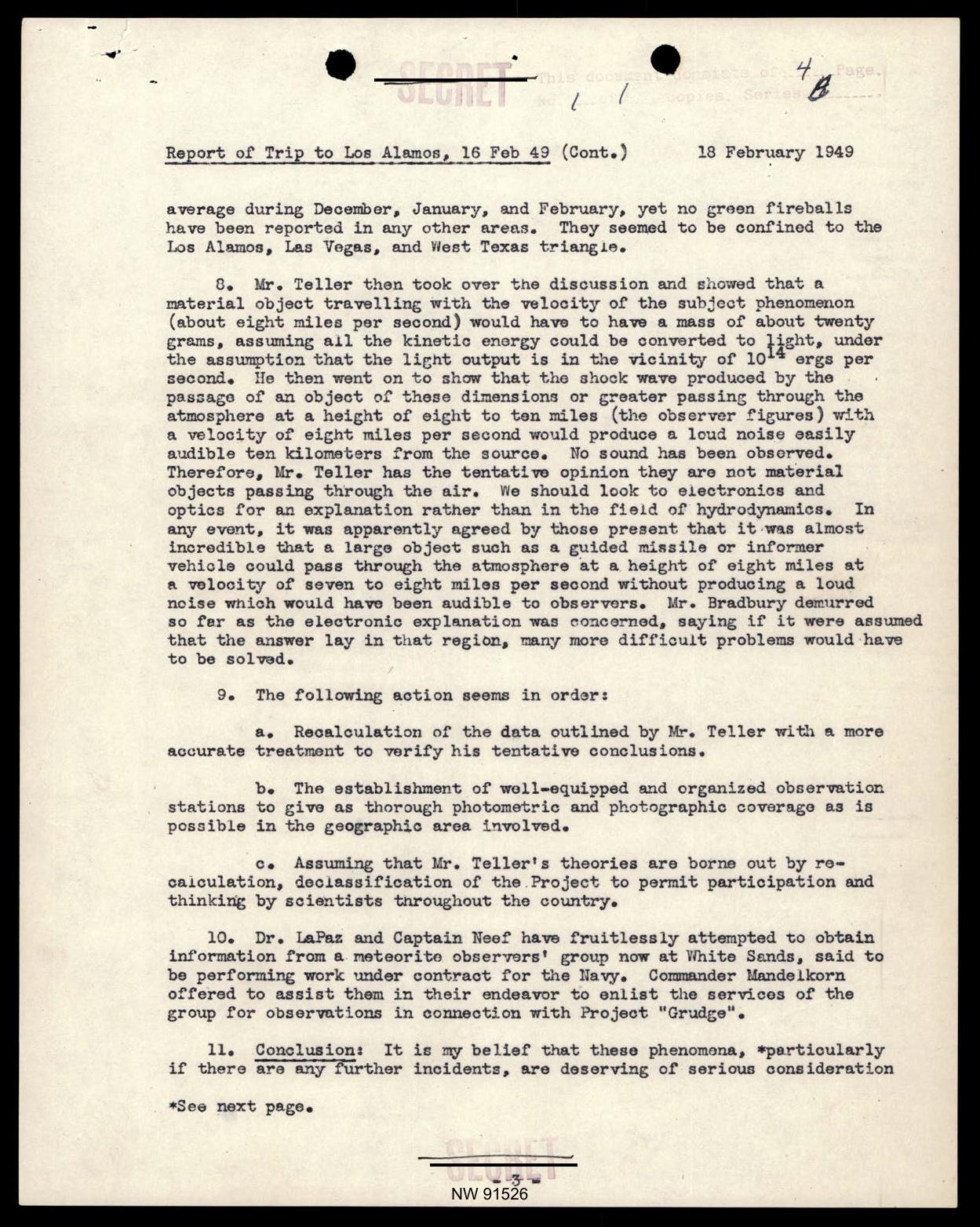
The first primary Sandia document in the public record. Edward Teller's name appears six times, and the Atomic Energy Commission and Kirtland Air Force Base recur throughout. Embedded in it are UAP descriptions from the Southwest nuclear complex in the late 1940s, the same green-fireball cluster the FBI was separately tracking. It closes the geographic triangle of the Manhattan-inheritor complex, putting Los Alamos, Sandia, and the production sites all directly in the UAP record.
ODNI-UAP-D001, First-person narrative, senior intelligence officer
A senior member of the intelligence community, flying a dedicated UAP investigation mission by helicopter, records an encounter lasting over an hour. Ground teams held the object on FLIR before visual confirmation, radar at the Joint Operations Center tracked it independently, fighters diverted from a training mission were called in, and one object split into two and outran the pursuing aircraft. It is the most complete multi-sensor chain in the document collection, and the first primary ODNI UAP record in the public domain.
The oldest key document in the collection, now first-hand
Tranche 4’s most important records are not the most redacted, they are the most foundational. Two of them turn secondhand summaries into primary sources: the verbatim 1949 Los Alamos conference transcript and the full 2015 Pantex incident report, the two ends of the nuclear through-line. A third, Project Sign’s 1948 initial report, is the birth certificate of official UFO study.
DOE-UAP-D004, Los Alamos “Conference on Aerial Phenomena,” 1949
Until now, the Los Alamos conference reached the record only through Cdr. Mandelkorn’s trip report. Tranche 4 releases the minutes themselves: the director of Los Alamos, Edward Teller, future Nobel laureate Frederick Reines, John Manley, and meteoriticist Lincoln LaPaz, in one classified room, on the green fireballs over the bomb. LaPaz argues the objects “could not be conventional meteorite falls”; Teller rules out a material object on acoustic grounds; a Soviet-weapon theory is raised and dropped. No one offers a better answer.
The third release: a historical corpus, largely unredacted
Tranche 3 added 53 documents. Unlike the modern mission reports above, most are decades-old files declassified in full, with little or no substantive redaction left to score. That is itself the point: the wall sits on the recent operational record, not on the historical one. The exceptions worth pursuing are the new modern items, AARO’s analysis of the Western U.S. “orbs launching orbs” event with five first-person agent narratives, and the FBI’s Colorado Springs and Northeastern cases. The complete Tranche 3 document set:
| Document | Description | Date |
|---|---|---|
| Central Intelligence Agency, 18 documents (Cold War, 1948–1976) | ||
| CIA-UAP-002 | Scientific Advisory (Robertson) Panel on UFOs, report | 1952–53 |
| CIA-UAP-003 | The CIA and Overhead Reconnaissance: the U-2 and OXCART programs | 1954–74 |
| CIA-UAP-004 | Case 17708 closed, and Dr. Leon Davidson | n.d. |
| CIA-UAP-005 | German scientists’ article on flying discs | ~1952 |
| CIA-UAP-006 | Sighting of unconventional aircraft (USSR) | Cold War |
| CIA-UAP-007 | Current status of the UFOB project | 1953 |
| CIA-UAP-008 | Speculative paper by N. Kardashev and A. Sakharov | Cold War |
| CIA-UAP-009 | Unknown flying objects observed over Budapest | n.d. |
| CIA-UAP-010 | Conversations with Soviet scientists on UFOs in the USSR | n.d. |
| CIA-UAP-011 | The Sary Shagan weapons testing range | n.d. |
| CIA-UAP-012 | Combatting fatigue in crewmembers | n.d. |
| CIA-UAP-013 | Unusual flying object sightings and attendant scientific activity (USSR) | n.d. |
| CIA-UAP-014 | British activity in the field of UFOs | n.d. |
| CIA-UAP-015 | Project Blue Book Special Report No. 14 | ~1955 |
| CIA-UAP-016 | Sightings of UFOs in Ladakh, Nepal, Sikkim and Bhutan | n.d. |
| CIA-UAP-017 | Placement on high alert due to perceived aggressive foreign posturing (SECRET//NOFORN) | n.d. |
| CIA-UAP-018 | Unusual flying object sightings and attendant scientific activity (companion) | n.d. |
| CIA-UAP-019 | Australian DoD: scientific and intelligence aspects of the UFO problem | n.d. |
| Department of War / AARO, 12 documents | ||
| DOW-UAP-D077 | Unresolved Case Analysis Update: Western U.S. Event (“orbs launching orbs”; ~40% unresolved) | Jun 2026 |
| DOW-UAP-D078 | Notional map of the Western U.S. Event incidents | 2026 |
| DOW-UAP-D079 | Witness Narrative Statement 1, Western U.S. Event | 2023 |
| DOW-UAP-D080 | Witness Narrative Statement 2, Western U.S. Event | 2023 |
| DOW-UAP-D081 | Witness Narrative Statement 3, Western U.S. Event | 2023 |
| DOW-UAP-D082 | Witness Narrative Statement 4, Western U.S. Event | 2023 |
| DOW-UAP-D083 | Witness Narrative Statement 5, Western U.S. Event | 2023 |
| DOW-UAP-D084 | U.S. Army flying-saucer study | 1949 |
| DOW-UAP-D085 | Transmission of the CIA Scientific Advisory Panel report | 1953 |
| DOW-UAP-D086 | U.S. Navy report of flying discs | 1948 |
| DOW-UAP-D087 | U.S. Air Force analysis of flying objects in the US (1–100) | ~1949 |
| DOW-UAP-D088 | U.S. Air Force analysis of flying objects in the US (101–172) | ~1949 |
| Federal Bureau of Investigation, 13 documents | ||
| FBI-UAP-D001 | FD-302, unresolved UAP report, Colorado Springs | 2022 |
| FBI-UAP-D002 | FD-1057, unresolved UAP report, Colorado Springs | 2022 |
| FBI-UAP-D003 | Digital rendering, Colorado Springs incident | 2022 |
| FBI-UAP-D004 | FD-1057-02, Northeastern U.S. plasma-orb reports | 2024 |
| FBI-UAP-D005 | FD-1057-04, Northeastern U.S. plasma-orb reports | 2024 |
| FBI-UAP-D006 | FD-1057-05, Northeastern U.S. plasma-orb reports | 2024 |
| FBI-UAP-D007 | FD-1057-06, Northeastern U.S. plasma-orb reports | 2024 |
| FBI-UAP-D008 | FD-1057-07, Northeastern U.S. plasma-orb reports | 2024 |
| FBI-UAP-D009 | FD-302-67, Northeastern orb sighting | 2026 |
| FBI-UAP-D010 | FD-302-71, Northeastern orb sighting | 2026 |
| FBI-UAP-D011 | FBI correspondence referral | 1949 |
| FBI-UAP-D012 | Newark Field Office UFO file | 1952–67 |
| FBI-UAP-D013 | Washington-area UFO investigation file | 1952–60 |
| NASA, 8 documents (Mercury & Gemini debriefings) | ||
| NASA-UAP-D015 | Astronaut scientific debriefings | 1962–63 |
| NASA-UAP-D016 | Preliminary Gemini-4 crew debriefing, part 1 | 1965 |
| NASA-UAP-D017 | Preliminary Gemini-4 crew debriefing, part 2 | 1965 |
| NASA-UAP-D018 | Gemini-4 experiment debriefing | 1967 |
| NASA-UAP-D019 | Gemini-5 technical debriefing, part 1 | 1965 |
| NASA-UAP-D020 | Gemini-5 technical debriefing, part 2 | 1965 |
| NASA-UAP-D021 | Gemini-7 technical debriefing | 1965 |
| NASA-UAP-D022 | Gemini-9 debriefing | 1966 |
| Intelligence Community & U.S. Government, 2 documents | ||
| ICA-UAP-D001 | IC analysis of the Colorado Springs incident (assessed: possible sunlight backscatter) | 2022 |
| USG-UAP-D001 | Congress–White House UFO correspondence | 1998 |
The founding documents, and where the wall now sits
Tranche 5 splits along the same line as the third release. Its historical material arrives essentially unredacted: the 245-page Air Materiel Command file, the 1947 Scandinavian intelligence review, the 1953 Navy film analysis and the two 1963 Brazilian cables carry no redaction notice at all. Its modern material carries the standard one. That division is now consistent across three releases, and it is the clearest single statement of where the government still holds a line: on the recent operational record, not on the historical one.
DOW-UAP-D100, Air Materiel Command report on unidentified flying objects
The most consequential historical document released to date, and the origin of official American UAP investigation. Headquarters tells AMC that “the conclusion appears inescapable that some type of flying object has been observed,” and warns that “silence on our part will not long be acceptable.” AMC replies having studied roughly 180 incidents: it builds the first official morphology, consults Nobel laureate Irving Langmuir, arranges a psychological study to test hallucination and hoax, examines the extraterrestrial hypothesis by name and finds support “completely lacking,” plots incident frequency against planetary approach curves, and concludes the discs, cigars and balls of light are “not of domestic origin.” It then recommends telling the press nothing, and if pressed, leading with weather balloons and astral bodies.
DOW-UAP-D098, Naval Photographic Interpretation Center film analysis
Frame-by-frame photogrammetry of the Great Falls and Tremonton films yields accelerations to 965 g, with birds, aircraft and balloons ruled out and consulted astronomers unable to identify the objects as man-made. The Center then names the assumptions its own figures rest on, calls one of them a fallacy, and asks for a better-resourced study it never received. Dated four months after the CIA’s Robertson Panel attributed these same two films to birds and reflections.
DOW-UAP-D101, Intelligence Information Report, Gulf of Oman
An AC-130J crew logs roughly 25 UAP instances in a single sortie, cold in both infrared polarities, computed at 250 to 1,300 mph with no propulsion observed. Two orbs depart during the delay between trigger pull and cannon recoil. The report carries the standard redaction notice; its distribution list, which is not redacted, runs to CJCS, DNI, DIA, NSA, NGA, FBI, DHS, State and CIA. What was withheld is the source and the exact location. What was released is the encounter.
These documents carry little or no substantive redaction, so they are catalogued for completeness rather than scored. The release’s 10 FBI digital reconstructions appear in the Archive; its videos and audio recordings appear in the Video Record.