Three hundred and thirty declassified government records. Eight patterns that cross agency, decade, and command. Every incident is here, in the language of the officials who filed it.
There is a difference between summaries and anomalies. Most coverage of declassified UAP documents does the first. This page does the second: it isolates the specific statements, the exact words filed by pilots, intelligence officers, astronauts, and FBI agents, that cannot be conventionally explained, then groups them by what they share across agencies and decades.
Eight patterns emerge from the full corpus. None requires the reader to accept any particular explanation. But each is drawn from primary sources with named institutions, official classification markings, and verifiable chain of custody. The patterns are the data.
Every known aircraft, drone, and balloon emits heat. These objects do the opposite. On "Black Hot" infrared, where colder objects appear brighter, they register as bright white. Three independent ISR aircrew from the same unit, the same operational area, across two months filed near-identical descriptions. This is not a sensor artifact. It is a repeatable observation. The August 2026 release added the cleanest instance and a complication in the same tranche. Over the Gulf of Oman in 2021 an AC-130J crew logged orbs reading cold in both white-hot and black-hot polarity, which rules out a display artefact and leaves a genuinely cold object roughly four feet across. In the western United States in 2026, by contrast, red lights bright to the naked eye and to night optical devices could not be acquired on thermal at all, while an object seen in the same sector the previous night read thermally hot. Four different thermal behaviours now sit in one release. Either these are heterogeneous phenomena, or thermal signature is not a stable property of them.
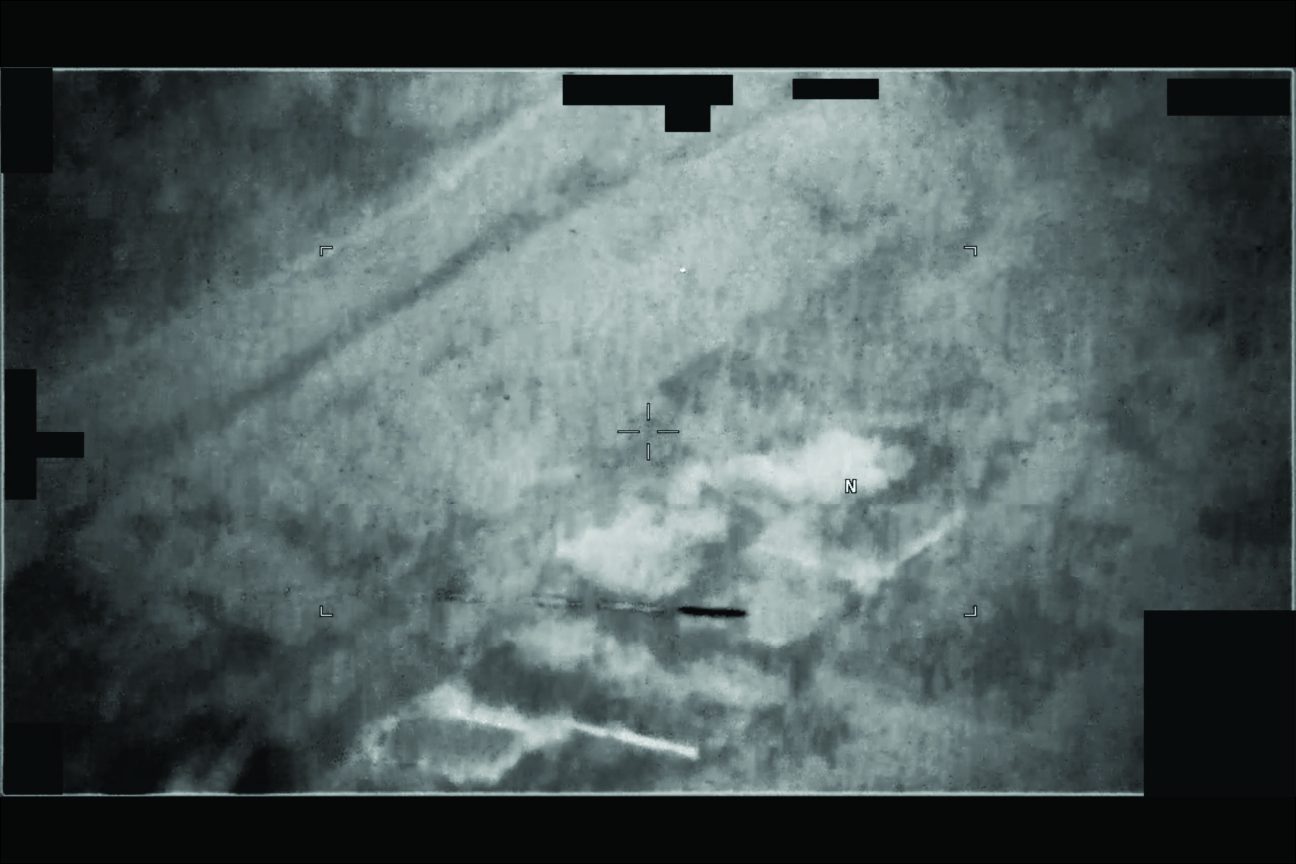
An ISR aircrew from the 1172nd Attack Squadron was operating at 23,819 feet over the Gulf of Aden when their sensor locked onto a round object. The infrared was set to Black Hot mode, a display configuration in which colder objects appear brighter. The object appeared bright white: cooler than the ambient air around it.
It was traveling at 277 mph on a 168-degree heading. The crew tracked it for eight minutes, long enough to establish precise sensor geometry (aimed 39 degrees below aircraft, 6.17 NM slant range). During those eight minutes, the object executed "a few abrupt directional changes" before contact was lost.
The thermal physics are not ambiguous. Any platform generating thrust, jet engines, rocket motors, electric motors under load, emits heat that appears dark on Black Hot IR. A cold, round, propulsion-less object at 277 mph executing directional changes does not fit any known aircraft or drone profile. The most benign explanation, a balloon, does not survive the abrupt directional change data.
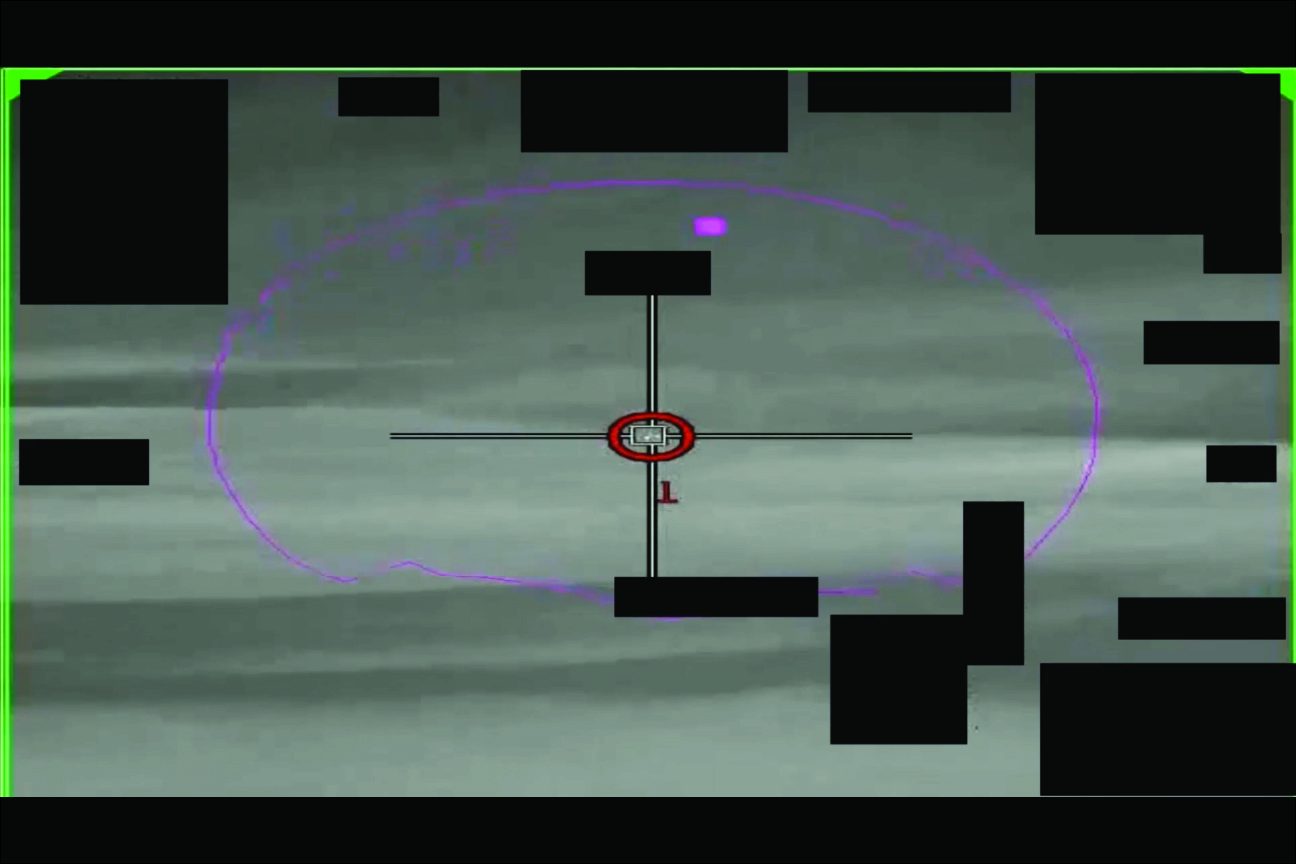
D57 is not isolated. Two other SPEAR Range Fouler Debriefs from the same unit, same AOR, across the same two-month window describe the identical signature: round, cold (bright white on Black Hot IR), with abrupt directional changes. Three independent reports, one behavioral and sensor profile.
| File | Date | Speed | Contact | Key language |
|---|---|---|---|---|
| DOW-UAP-D38 | 2020, Gulf of Aden | Erratic / low | ~1 min | "solid white object… made erratic movements above the water" |
| DOW-UAP-D44 | 15 Oct 2020 | 20 mph / 319° | 1 min | "round, cold object in IR… bright white… a few abrupt directional changes" |
| DOW-UAP-D57 | Oct 2020 | 277 mph / 168° | 8 min | "round, cold object in IR… bright white… a few abrupt directional changes" |
Same squadron. Same theater. Same Black Hot setting. Same morphology. Same thermal profile. Speed varies, 20 to 277 mph, which rules out a single object but is consistent with a class. The 1172 ATKS was encountering these repeatedly, and the SPEAR reporting system captured the pattern in official records.
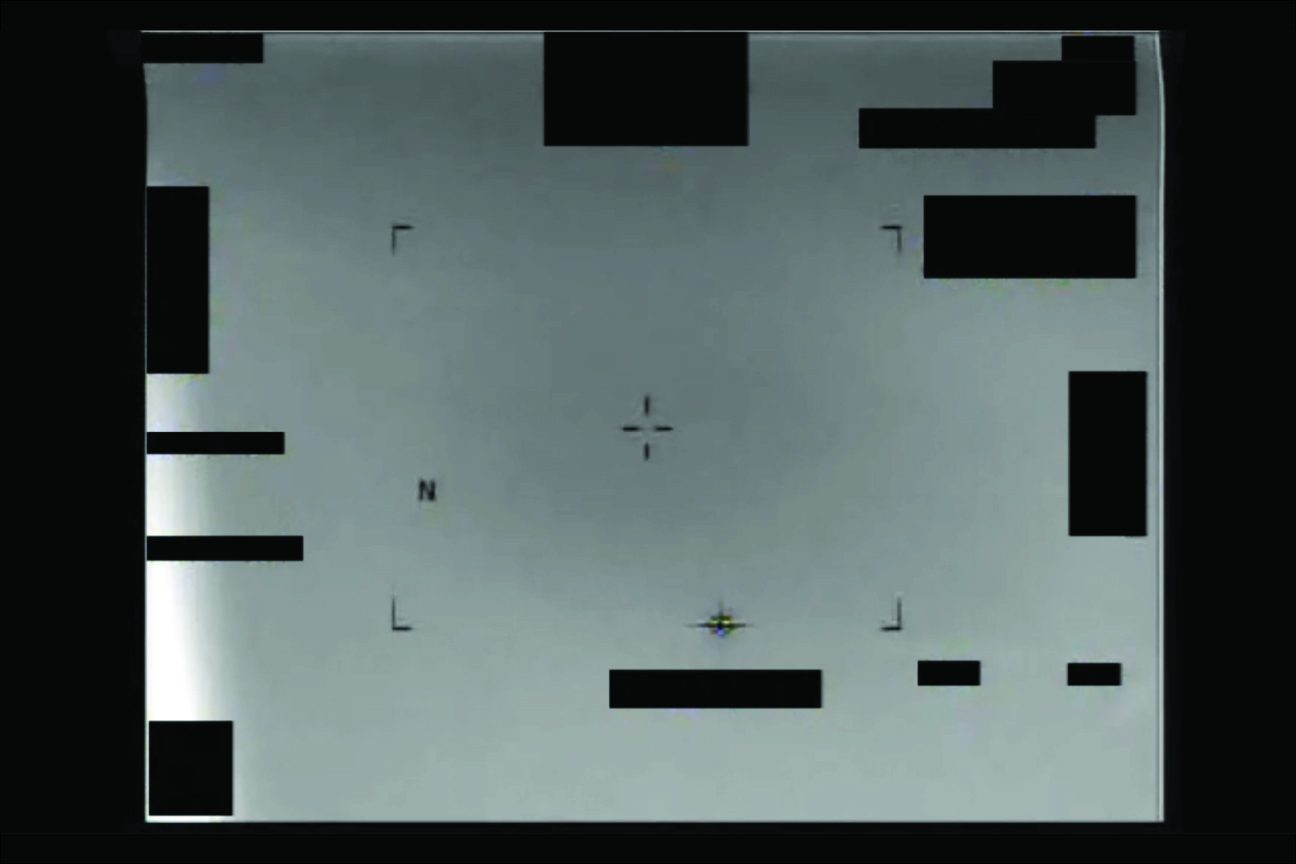
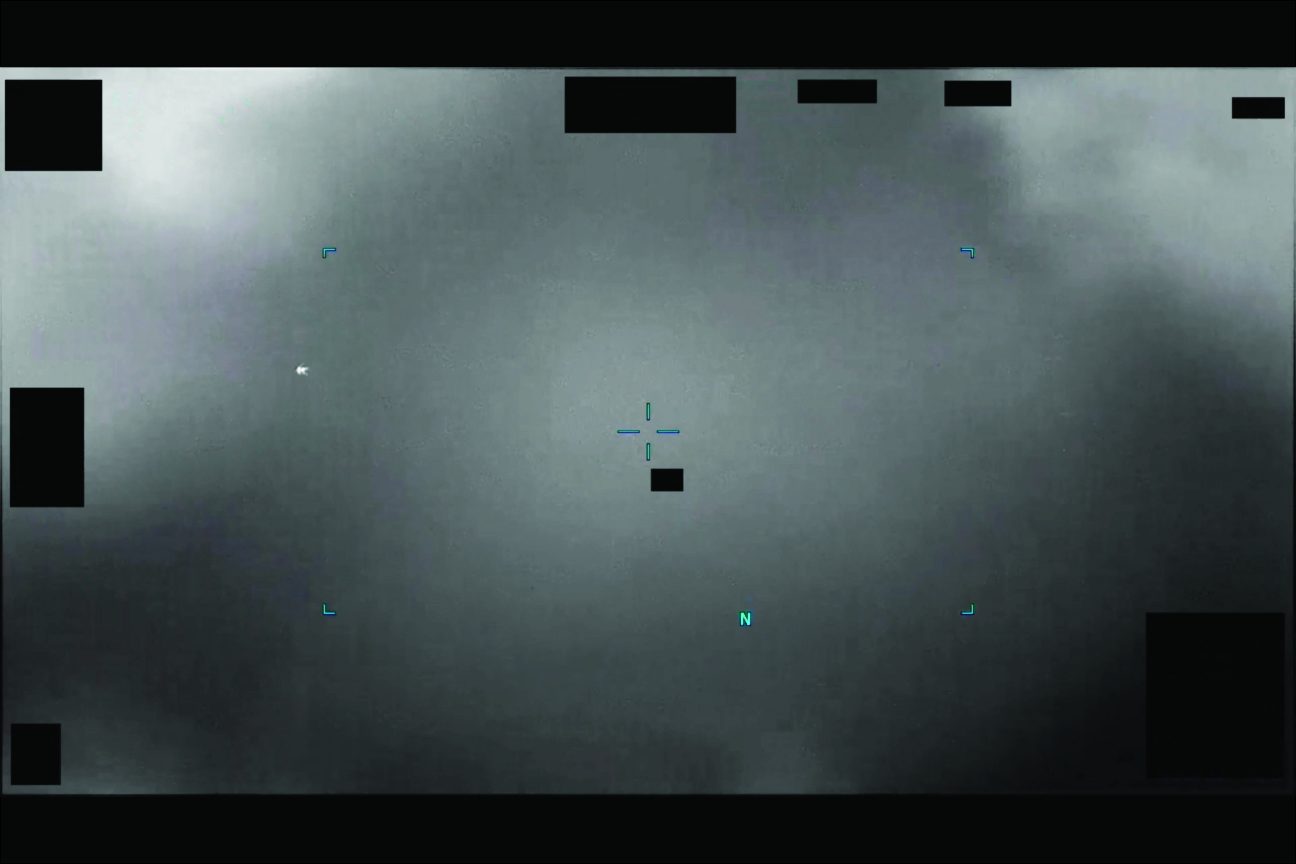
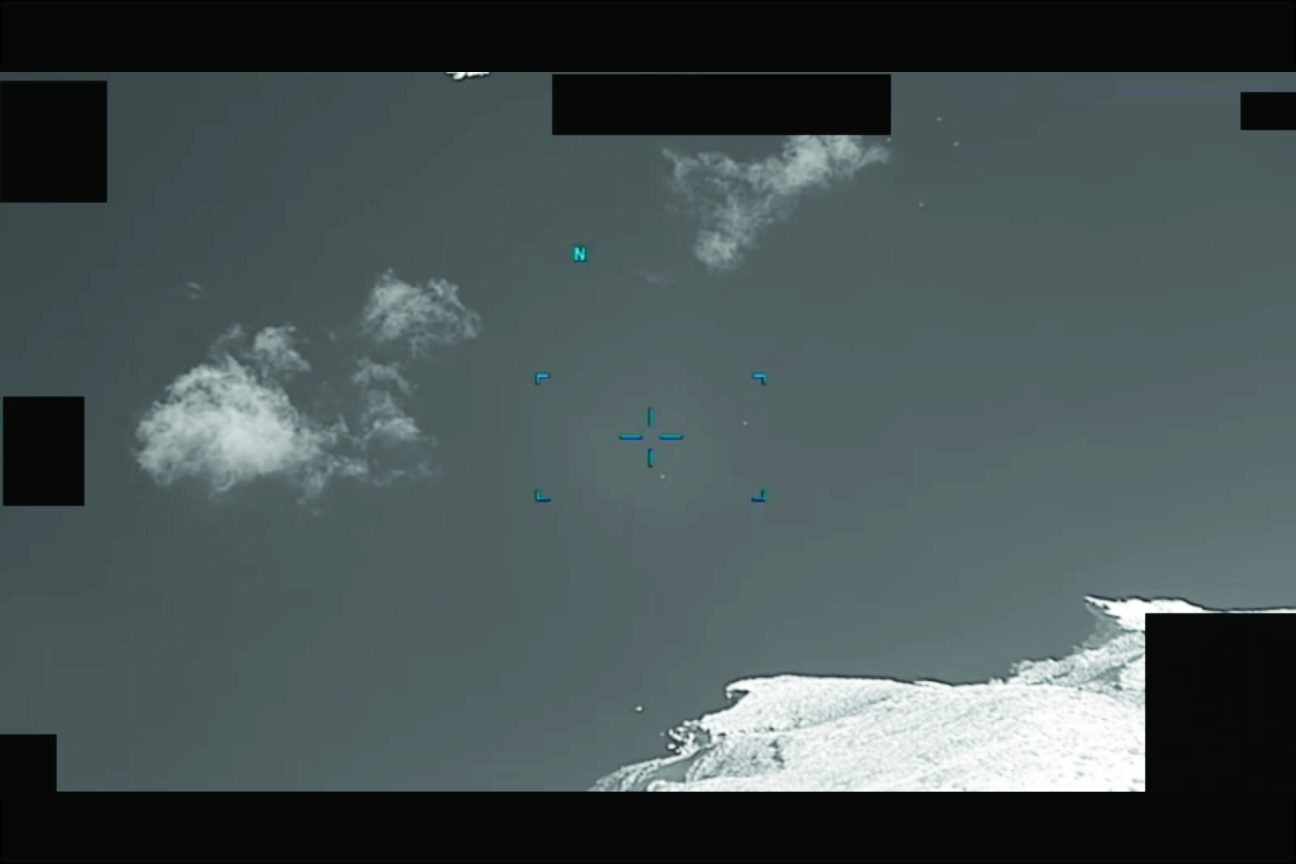
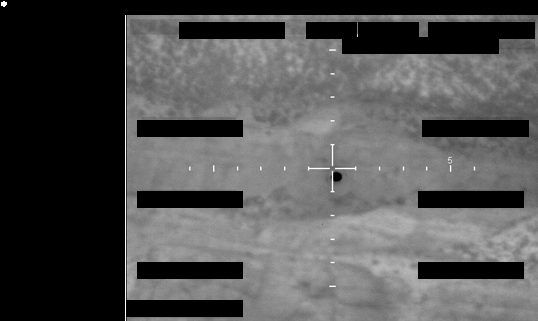
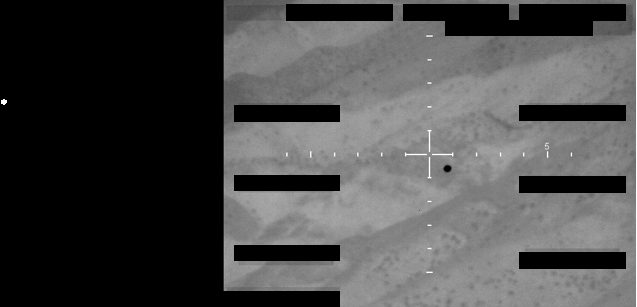
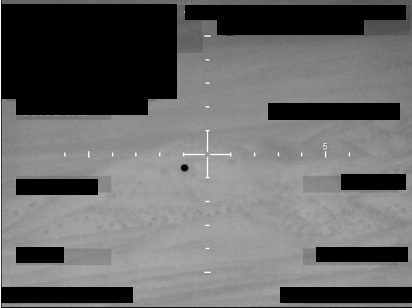
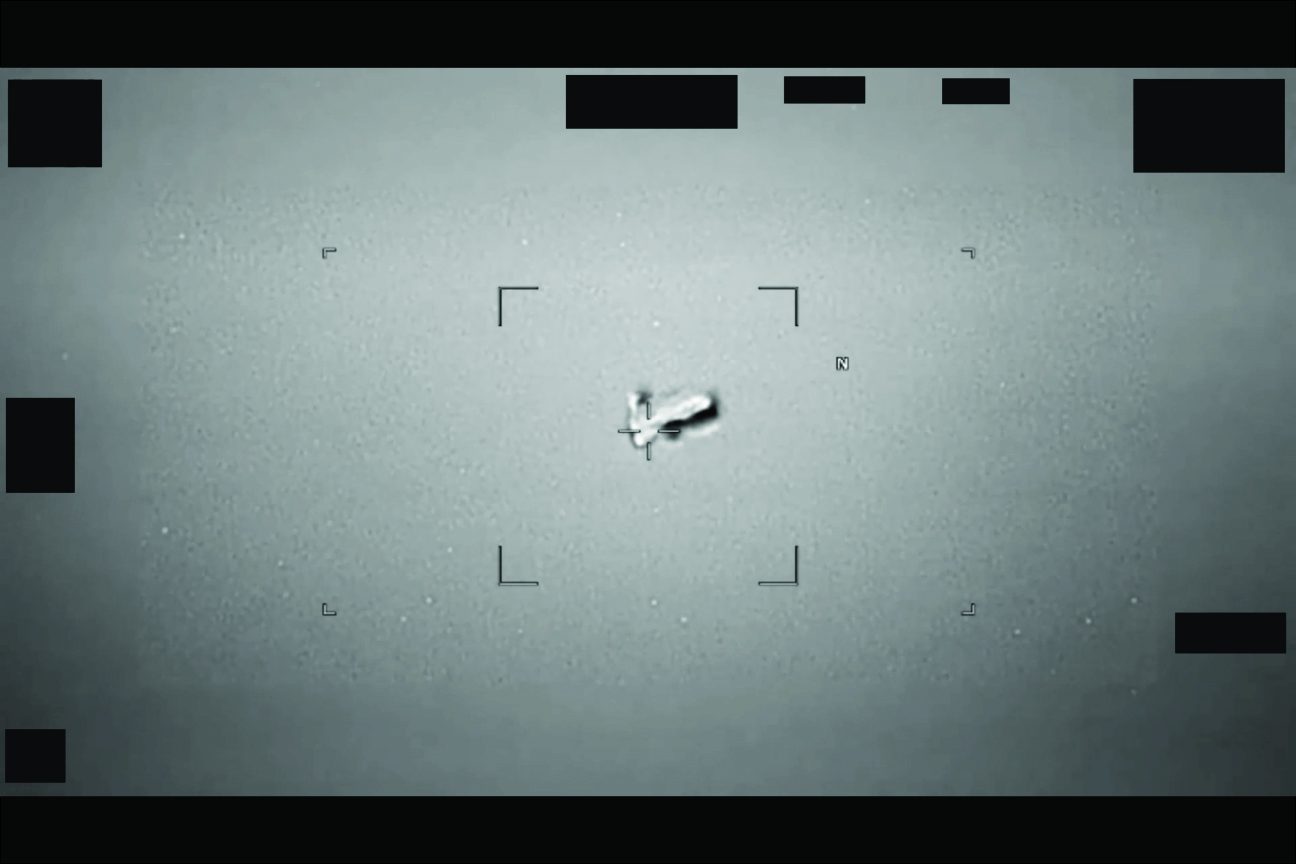
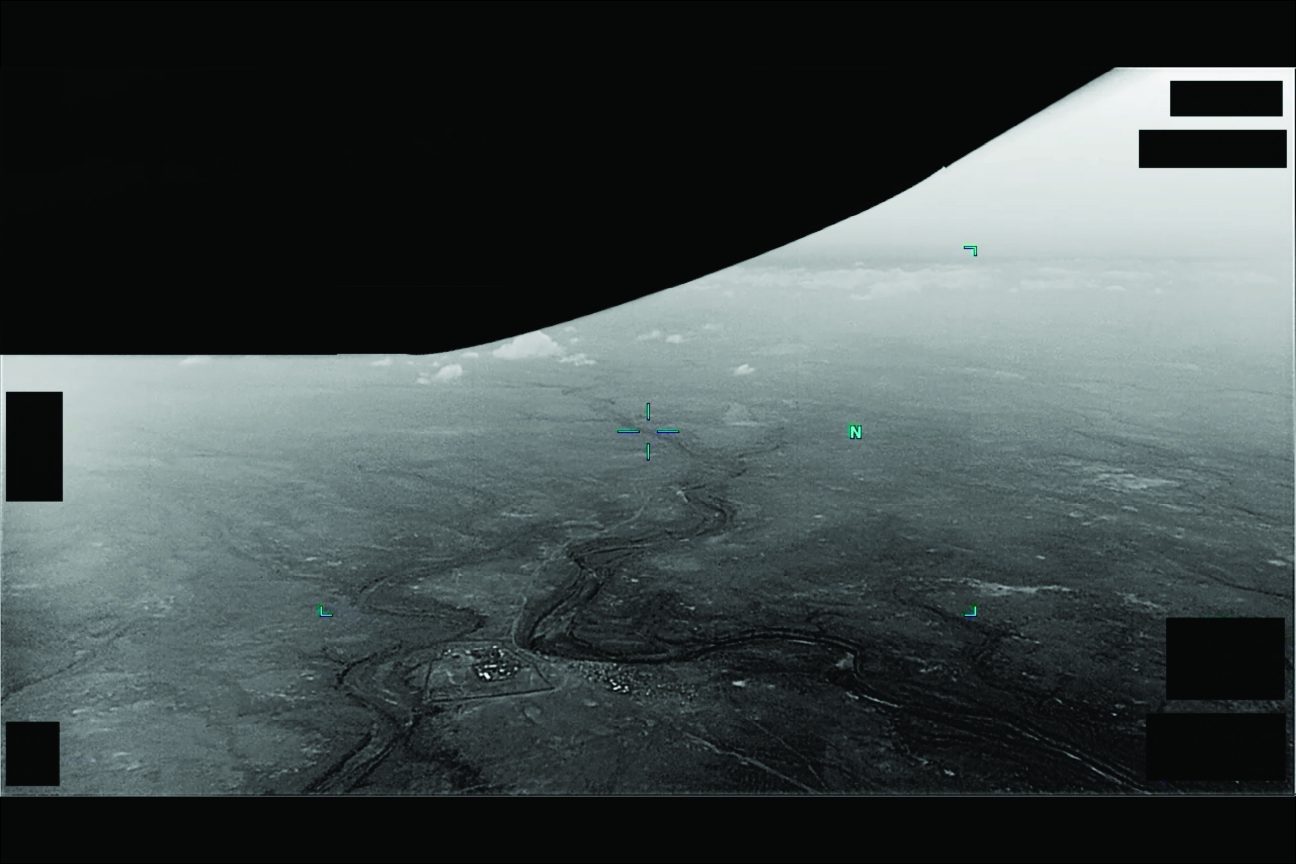
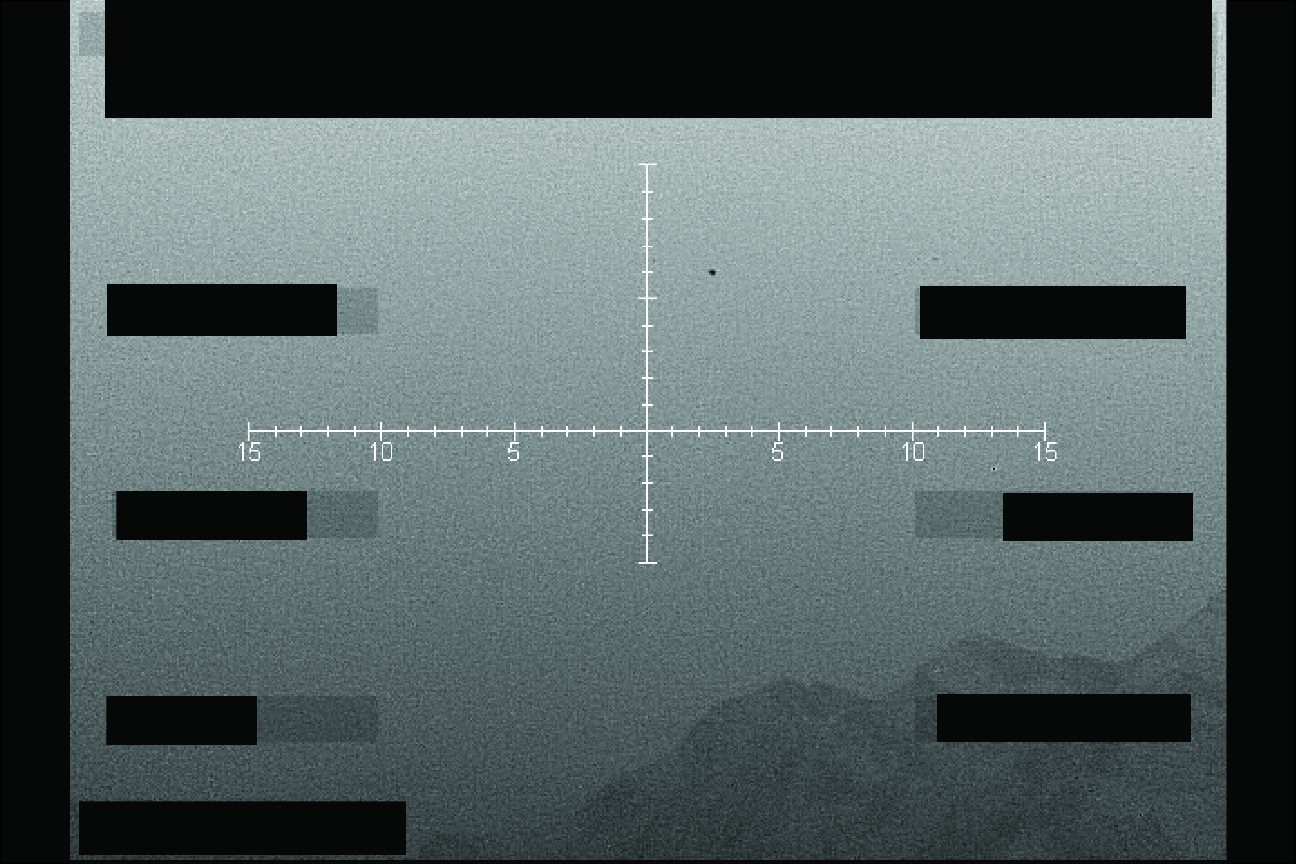
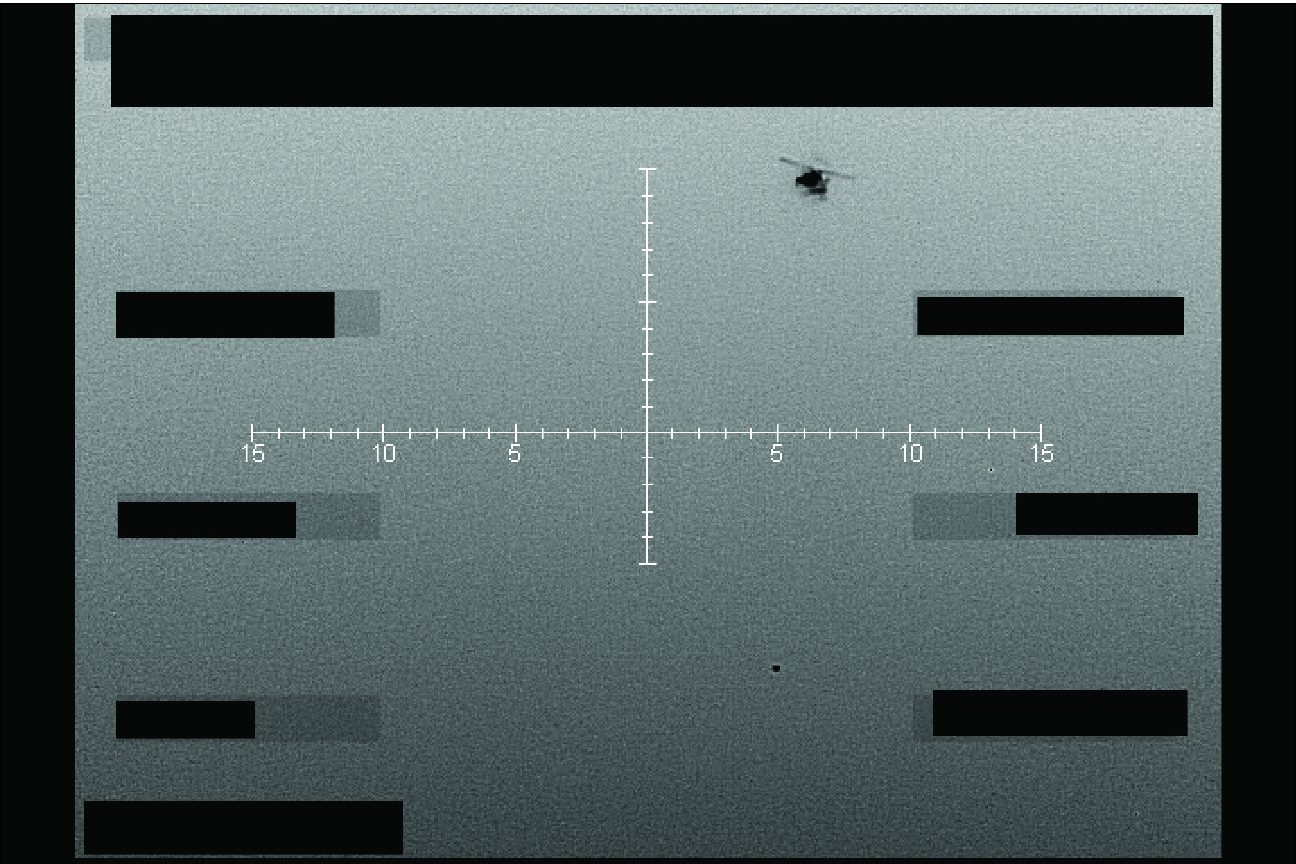
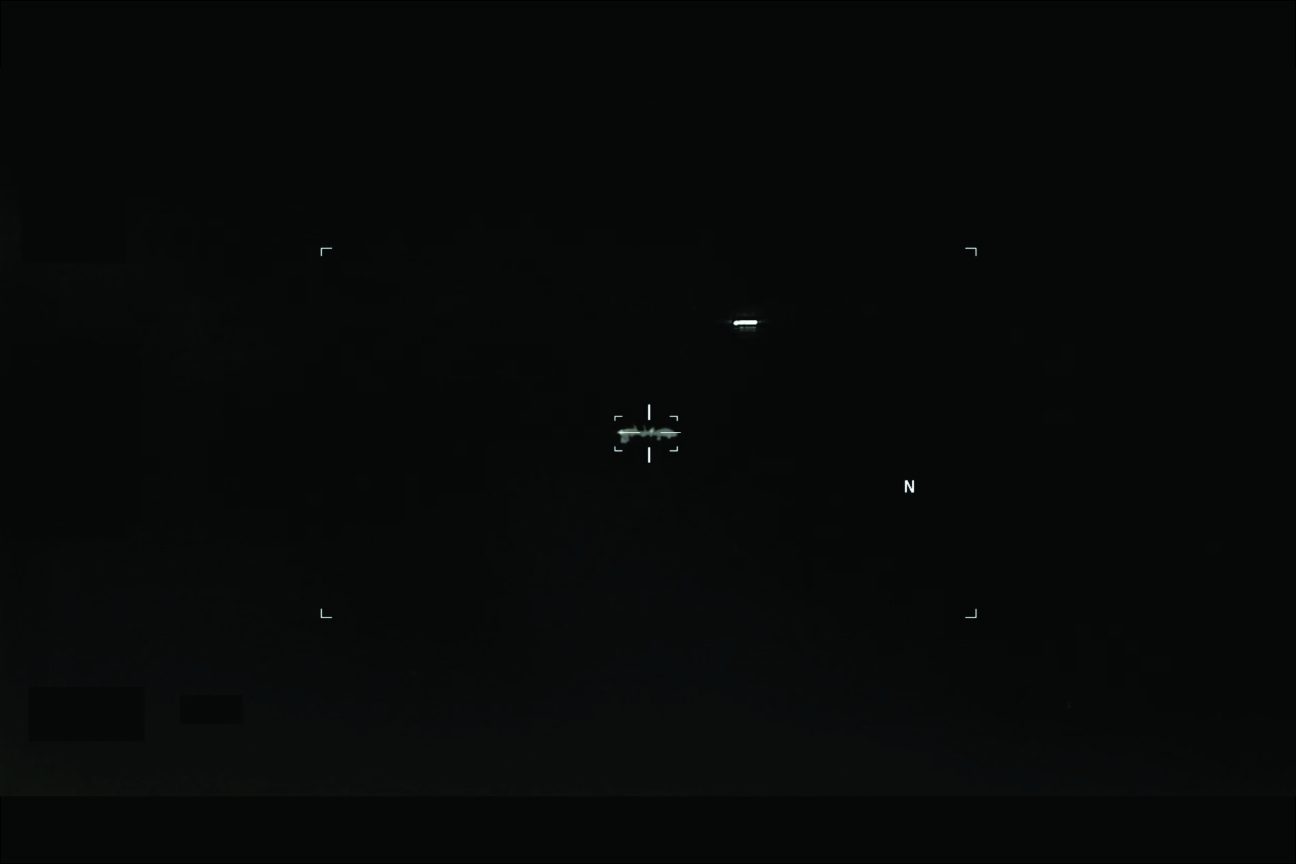
CENTCOM AOR sensor stills spanning 2013–2023. The cold-IR objects documented in the 2020 cluster appear in an operational theater with sustained UAP activity across multiple commands and years. Full archive →
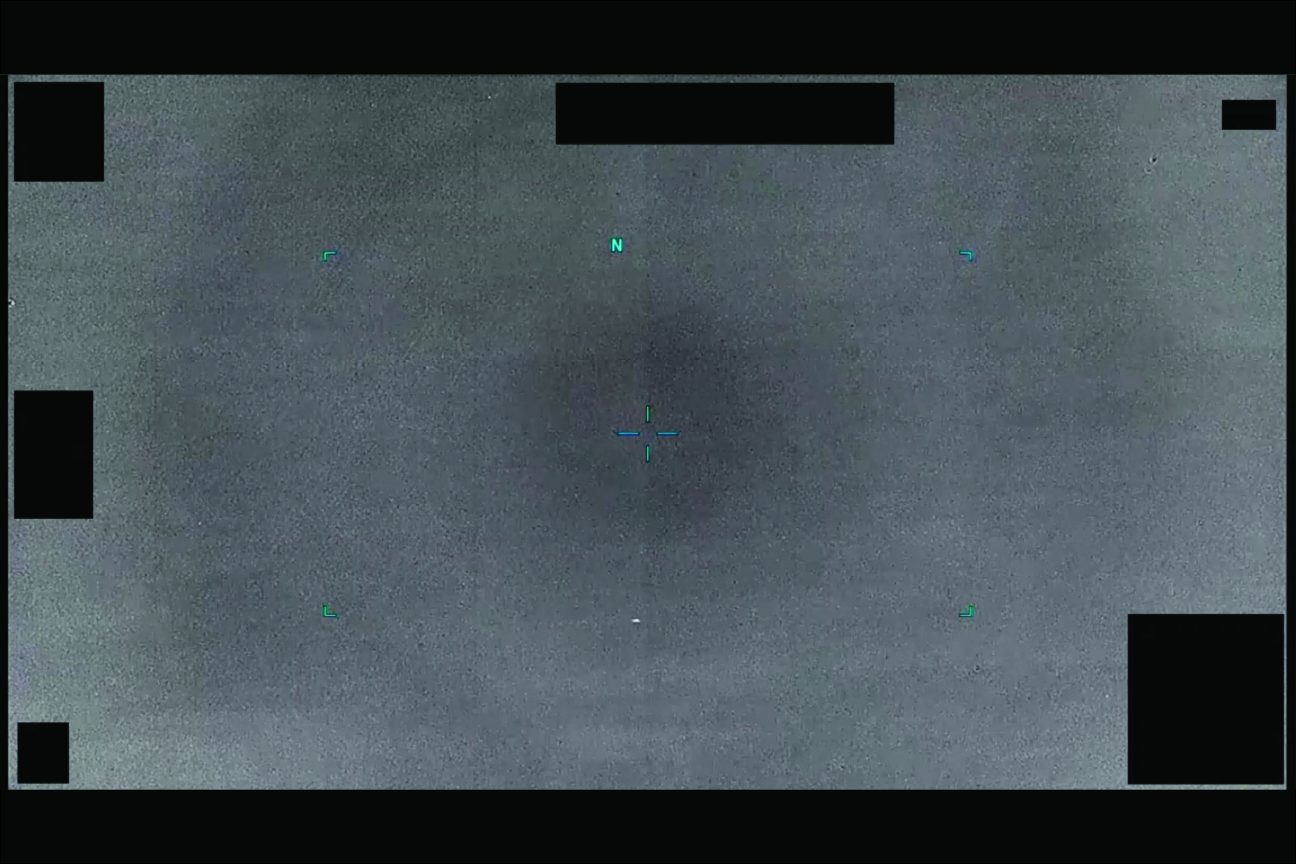
Short-Wave Infrared (SWIR) is one spectral band among many available to military sensor platforms. An object visible in SWIR but invisible to electro-optical and visible cameras is not exhibiting reduced radar cross-section or IR suppression, it is exhibiting something that has no established engineering explanation. DOW-UAP-D25 is the only confirmed case in the corpus, but it is documented in an official Mission Report with a structured UAP reporting block and assigned event serial number.
A Special Operations Forces ISR platform with a multi-spectrum sensor suite was in transit at mission altitude when the crew detected an object on the SWIR camera. It was diamond-shaped, with "a non-maneuvering probe at the bottom", a fixed appendage. Estimated speed: approximately 434 knots. Event duration: approximately two minutes, 0509–0511Z. The UAP maintained a steady flight path with altitude variation but no trajectory change.
The critical finding: the crew switched to the electro-optical camera, then to visible spectrum. The object disappeared from both. It existed, at 434 knots, with a fixed morphological structure, in one spectral window only.
SWIR wavelengths (roughly 1.0–2.5 micrometers) are primarily used for target acquisition in hazy or obscured environments. There is no known passive object that is optically detectable in SWIR and simultaneously invisible to EO and VIS sensors at those ranges. This is either a sensor anomaly, for which no mechanism has been proposed, or the object has optical properties outside the range of current published materials science.
The video associated with this report (DOW-UAP-PR028, DVIDS) captures the SWIR sensor data and includes the moment the sensor operator switches to visible spectrum and loses the object. The AARO annotation reads: "Key detail: SWIR-only detectability. Object invisible to EO and visible-spectrum sensors."
Aerodynamic flight requires coordinated turning, banked curves with a radius determined by speed and G-loading. A right-angle turn at 80 mph near the ocean surface, executed without deceleration, is aerodynamically impossible for any known vehicle at that scale. Multiple documents capture this behavior. The clearest is DOW-UAP-D33, filed as an official MISREP with structured UAP reporting by the crew.
During a 13.5-hour ISR mission transiting to replace a "lightning line" aircraft, the crew spotted a UAP flying just above the ocean surface. The contact lasted three minutes, 0035 to 0038Z, during which the object executed multiple sharp 90-degree turns at an estimated 80 mph.
The physics: a 90-degree turn at 80 mph with no perceptible turn radius requires either instantaneous velocity vector change, which implies infinite G-loading and structural failure for any known aerodynamic vehicle, or a propulsion mechanism that does not depend on aerodynamic lift and drag. The MISREP crew observed no propulsion signatures, no exhaust, and no conventional airframe features. The object appeared "seemingly circular but too small to distinguish details."
No RF, no IR signatures detected. The object simply turned, at right angles, multiple times, then disappeared from the sensor feed.
The 90-degree turn is the most acute kinematic anomaly documented, but other mission reports in the corpus record equally unexplained velocity behavior.
| File | Event | Kinematic anomaly | Validity |
|---|---|---|---|
| DOW-UAP-D4 | Arabian Gulf, 2020 | Estimated 321 knots, then "increased speed and changed direction towards the east" | MEDIUM |
| DOW-UAP-D5 (Event 2) | Arabian Gulf, 2020 | Two objects at 278 knots "increased speed and changed direction towards the south" | MEDIUM |
| DOW-UAP-D19 | Syria / ESSA, 2023 | Multiple objects at FL600+ (above 60,000 ft) maneuvering quickly W→E, disappearing from targeting pod | HIGH |
A Tranche 2 video released through DVIDS, titled by the submitting command as a Syrian UAP undergoing instantaneous acceleration. The clip is the only released artifact for this item; no mission report, platform identification, or AARO assessment accompanies it in the declassified text record. Details beyond the video title — including any weapons-system lock or specific kinematic finding — are not independently established.
"Instantaneous acceleration" in sensor footage is frequently an artifact: an object moving behind cloud, an abrupt sensor slew, or a contrast shift that mimics motion. With no mission report or official analysis released, and the descriptor coming from a video title rather than an AARO finding, this clip cannot be treated as a confirmed kinematic anomaly. The May 30 fact-check moved it to Contested for exactly this reason.
Beginning in 1947 and continuing through the present, unidentified aerial phenomena have been reported in proximity to nuclear weapons production and storage facilities by law enforcement, military, and intelligence personnel. The geographic concentration is not random. It spans Oak Ridge, Los Alamos, Sandia, the Savannah River AEC Plant, and Pantex, the nation's primary nuclear infrastructure. The FBI case file 62-HQ-83894, opened in 1947 and active for over a decade, is the primary documentary record.
Beginning in December 1948, approximately 150 aerial phenomena observations were logged near the most sensitive nuclear installations in the country, Los Alamos National Laboratory and Sandia Base, where the nation's nuclear weapons were designed, assembled, and tested. The Air Force brought in Dr. Lincoln LaPaz, the University of New Mexico's foremost meteor expert, to assess the observations.
LaPaz's conclusion was unambiguous: the phenomena are not meteoric in origin. He noted that objects moving at the velocities documented could travel from the Ural region to New Mexico in under 15 minutes, raising the possibility of Soviet guided missiles. A classified observation program was established under Land-Air Inc. (Alamogordo). The FBI was formally briefed by Air Force OSI.
The Land-Air Inc. classified observation program, a 24-hour watch established after a May 24, 1950 sighting of 8-10 simultaneous objects, is the first documented government UAP observation program. It predates Project Blue Book's formal establishment and was running in parallel with it, specifically focused on nuclear installation airspace.
The nuclear-proximity pattern is not confined to the FBI file. It appears across agencies, decades, and document types, a thread running from 1947 to the present.
| File | Facility | Date | Event | Validity |
|---|---|---|---|---|
| 62-HQ-83894 Serial 153 | Oak Ridge, TN (Y-12/K-25/X-10) | July 1947 | Objects observed and photographed near the primary nuclear weapons complex; submitted to FBI as Internal Security matter | IMAGE-ONLY |
| 62-HQ-83894 Section 6 | Los Alamos / Sandia, NM | 1948–1950 | ~150 observations; Dr. LaPaz: not meteoric; classified 24-hr observation program established | HIGH |
| 62-HQ-83894 Section 7 | Savannah River AEC Plant, SC | 8 Aug 1952 | Two Du Pont employees observe "blue light with orange fringe shaped like a saucer" over the 400 Area at high speed; urgent FBI teletype filed | MEDIUM-HIGH |
| DOE-UAP-D005 | Pantex Plant, Amarillo TX | 1–2 Sep 2015 | Silent object, no identifiable propulsion, detected by ground surveillance radar; evaded a Protective Force pursuit, speeding up and changing direction; full report released in Tranche 4, imagery enhanced by Sandia | FULL REPORT · T4 |
| DOE-UAP-D003 | Los Alamos (LANL), NM | May 1986 | Pajarito Astronomers newsletter: LANL scientist Dr. John Warren (AT-6 division) invited to formally present "Why Should a Scientist be Concerned about UFO's?" to the Los Alamos community | MEDIUM |
| 18_100754 | Multiple / national assessment | 23 Sep 1947 | Gen. Nathan Twining (AMC) formally certifies objects are real, controlled, evasive to radar, and recommends inter-agency investigation including the Atomic Energy Commission | HIGH |
Pantex is the only facility in the United States where nuclear warheads are assembled, disassembled, and dismantled. On 1–2 September 2015 the plant's ground surveillance radar detected an unknown object crossing the site. The Protective Force pursued it by vehicle and tracked it with binoculars and a CROWS remote weapon-station camera. Tranche 4 released the full incident report (DOE-UAP-D005), the narrative behind the image the collection already held.
The officers' account is the behavior in one paragraph: the object made no sound, they could identify no propulsion system, and when they gave chase it increased speed and changed direction until they lost it off-site. Gates were secured, the tower video went to Sandia National Laboratories for enhancement, and the evidence was turned over to the FBI. Sixty-six years after the green fireballs over Los Alamos, the same signature over the same kind of place, this time with a radar track.
Most UAP descriptions in this corpus are vague, round, spherical, unlit. A handful are not. Three documents provide morphological detail specific enough to rule out conventional misidentification: a football-shaped body with three radial projections, a three-object formation maintaining fixed relative spacing, and a diamond shape with a fixed non-maneuvering appendage. These descriptions come from separate platforms, separate commands, and separate years.
Nine seconds of infrared footage from an INDOPACOM platform. The sensor focuses on an area of contrast that resolves, unambiguously, into a football-shaped body with three radial projections: one oriented vertically, and two oriented downward at 45-degree angles relative to the major axis of the main mass.
AARO's annotation calls this "the most morphologically specific description in either tranche." No operator description was provided; the morphology is derived entirely from the sensor imagery. No conventional drone, balloon, or aircraft matches this configuration. The angular precision of the projections, documented by AARO analysts, implies a structured, fabricated object.
Nearly two minutes of infrared footage tracking three distinct areas of contrast simultaneously. Throughout the entire runtime, the three objects maintain a fixed position and orientation relative to one another, a formation that holds without deviation across the full duration.
Formation-holding without active communication or rigid physical connection implies either: coordinated autonomous behavior across three independent objects, or a single rigid structure with three IR-contrast points. Both interpretations are extraordinary. No conventional explanation, weather balloons, flares, drones, produces three objects in perfect fixed formation for two minutes on an ISR platform's sensor.
Read together, several of these morphology reports share one specific and unusual feature: a fixed, non-maneuvering protrusion on an otherwise simple body. It recurs across short-wave infrared, thermal infrared, and naked-eye observations, from unrelated platforms, commands, and years. A rigid appendage is not a sensor artifact, and it is not a feature of balloons, flares, or birds.
| File | Body | The appendage, in the source language |
|---|---|---|
| DOW-UAP-D25 | Diamond, SWIR-only, ~434 kts (Greece, Jan 2024) | "a non-maneuvering probe at the bottom" |
| DOW-UAP-D27 | Glowing sphere, ~140 kts over water (UAE, Oct 2023) | "a vertical unwavering cylindrical pole/bar attached on the bottom of the object" |
| DOW-UAP-PR046 | Football-shaped body (INDOPACOM IR) | "three radial projections: one vertical, two at 45-degree angles" |
| Western_US_Event_Slides | Large fiery orb, ~12–18 m (AARO field investigation) | "did almost appear it might have had a small spindle or something connecting it from underneath to the rock formation" |
Four independent records: two modern special-operations sensor reports, an INDOPACOM infrared track, and a federal agent's naked-eye observation logged by AARO, each describe a simple luminous or geometric body with a rigid, fixed protrusion beneath or attached to it. Whatever the objects are, the recurrence of the structure itself is the finding.
Left: FBI composite sketch of an unidentified object, 2024 (from the Photo-B series supplementary file). Center and right: Photo-B series imagery submitted through FBI reporting channels. The Photo-B set of 24 documents is image-only; text extraction was not possible. Archive →
Multiple documents describe an object that appears, releases or splits off smaller objects, and then disappears. A parent emitting sub-objects is one of the most distinctive recurring behaviors in the corpus, and it surfaces in unrelated contexts across separate agencies and theaters: a federal law-enforcement investigation at a classified Western US site (AARO briefing slides plus five independent witness narratives), a senior intelligence officer's first-person ODNI report from late 2025, and, as a possible instance, a combat-theater ISR observation over the East China Sea in 2024. These records do not reference one another. The morphology is the same.
Six federal law enforcement special agents (USPER1–USPER6) across three independent two-agent teams documented four distinct sub-events over two days at a classified location near sensitive federal infrastructure. The events were formally investigated by AARO, which conducted on-site measurements and produced briefing slides, making this the only case in the corpus with an AARO field investigation as part of the official record.
The defining event: an orange orb appears, launches 2–4 smaller red orbs, then disappears. This sequence was observed at least five times by three teams positioned at different vantage points. The teams had no line-of-sight to each other; their reports were compiled independently.
The slides document four sub-events: (1) Orbs Launching Orbs, five or more deployments observed; (2) a stationary spherical object 12-18 meters in diameter at 1,050 meters distance, silent, hovering for approximately one minute with "zero resistance"; (3) a thin dark kite-shaped object moving "with zero resistance", NVG image shows it as "a very thin line"; (4) a semi-transparent object that blocked and then unblocked a spotlight beam, suggesting a refractive or cloaking effect. AARO's on-site measurements corroborate the witness size estimates. This is not anecdote. It is a formal investigation with multiple independent confirmation chains.
Tranche 3 update (June 2026): AARO released its formal Unresolved Case Analysis and five first-person witness narratives for this event. AARO ruled out misidentified aircraft exhaust, judged drones unlikely (a multi-hour loiter exceeds battery limits), and attributed roughly 60 percent of the activity to military infrared countermeasure flares, but concluded that "approximately 40 percent of the reported phenomena lack a plausible explanation and thus remain unresolved." Writing separately, the five agents converge on the same morphology: an orange "mother orb" that appears for one to two seconds, releases two to four red orbs in coordinated motion, then vanishes, repeated over hours. Independent observers, no line-of-sight to one another, describing the same thing, is precisely the signature this pattern is built on.
A senior U.S. Intelligence Community officer, flying in a helicopter with two pilots, filed this first-person account after a multi-hour UAP investigation mission over a military test range. The account is corroborated by four simultaneous sensor and observer modalities: the senior IC officer (naked eye), two pilots (NVGs and FLIR), ground teams (FLIR), and radar confirmation from the Joint Operations Center.
During the event, the ground team reported an object that was "super-hot," rose from the ground, split into two, and changed direction. From the helicopter, the pilots observed "a smaller object emerge" from the main object before it "accelerated out of sight." Independently: "countless orange orbs swarming in all directions against the backdrop of the mountain." Then, the formation event: four or five orbs flaring up in a T-shape, dimming in reverse order, repeating as they tracked a fighter jet.
This is the most recent significant document in the corpus and the only one with a senior intelligence officer as a first-hand participant. The object-splitting behavior, T-formation sequencing, and apparent jet-tracking are documented across four independent observation modalities active simultaneously. It was filed as a formal USPER (US Person) report through ODNI channels.
The same question surfaces in a completely different theater. During a precision-guided-munition shot over the East China Sea, an AFSOC sensor operator watched an unidentified object cross the aircraft's field of view at high speed, throwing an infrared lens flare. The crew could not resolve one detail: whether a smaller object had detached from the primary UAP before it left frame. The movement looked predetermined rather than reactive, and the contact held on two independent sensors.
This is not a confirmed deployment, and the report says so plainly. Its value is the convergence: a trained ISR crew in the Pacific, with no connection to the Western US investigation or the ODNI account, independently reaching for the same description, one object possibly becoming two. When the same ambiguous behavior prompts the same question across unrelated crews, agencies, and oceans, it earns a place in the pattern even where it cannot be proven.
Objects that disappear while under active sensor lock, not gradually fading, not departing the field of view, but simply ceasing to exist in the sensor feed, appear across multiple documents. The most extreme case involved active noise jamming from the contacts immediately before disappearance. One document records objects at FL600+ (above 60,000 feet) disappearing from targeting pods after repeated observations by multi-ship crews.
An 11th Expeditionary Fighter Squadron pilot on a defensive counter-air mission filed a Range Fouler Debrief after detecting contacts that emitted active noise jamming before disappearing instantaneously from radar. The 0112Z event at 26,000 feet contact altitude is documented in the official SPEAR system, declassified by MG Richard A. Harrison.
Active noise jamming is an electronic warfare signature, it implies intentional, directed electronic countermeasures rather than a passive radar cross-section. A weather balloon or bird does not jam radar. The subsequent instantaneous disappearance from an active radar system is consistent with either an engineered stealth transition or a capability that has no public analogue.
A 2-ship F-16CM DCA mission. Starting at 2302Z, the flight observed several bright objects maneuvering quickly west to east northeast of Ruwayshid. The crews would obtain a possible UAP on targeting pod (TV mode) for approximately 20 seconds before the object would become dim and disappear. This sequence repeated ten to twenty times. None of the objects were ever seen in formation.
Above 60,000 feet. Objects observed ten to twenty times in a single sortie. Targeting pod signatures analyzed against stars by an AARO analyst, and found to differ. The reference to "prior sorties" establishes that this was a recurring phenomenon in the ESSA area. One incident is an anomaly. Twenty repetitions in one sortie, across multiple sorties, analyzed by targeting pod against known stellar signatures, that is a data set.
The phrase "as previously seen in prior sorties" is also a significant institutional admission. It confirms that additional sighting documentation exists for this area that has not been released. The crew was not reporting something new; they were comparing it against a pattern they had already filed. Whatever those prior filings contain, they are not yet in the public record. The declassified corpus is a fraction of what was observed, and the document itself tells you so.
Two distinct phenomena at the outer boundary of the corpus: objects that appear to respond to human attention, tracking aircraft, approaching helicopters, matching formation with fighter jets, and the space record, where mission transcripts from Apollo and Gemini missions document unidentified co-orbital objects acknowledged by NASA mission control and released publicly by the PAO.
A sharper version of the behaviour, from August 2026. Over the Gulf of Oman on 8 September 2021, an AC-130J dropped a water-activated flare as a live-fire target and orbited it. Two cold orbs about four feet across took station directly over the flare, between zero and twenty feet above the water, and held there for roughly fifteen seconds while the sensor watched them.
Then the Combat Systems Officer pulled the trigger on the 105mm cannon. According to the intelligence report, the pair departed during the mechanical delay between the trigger pull and the recoil — before the round left the tube, before the muzzle flash, before the noise.
Why this matters, and how far it goes. Every other case in this section describes objects reacting to being observed. This one, taken at face value, describes something reacting to an action that had not yet produced any observable effect. That is a different and more specific claim. It also rests on one crew's judgement of a sub-second interval, and human timing at that scale is unreliable. It is logged here because it is the only instance of its kind in the corpus, not because it is settled.
From the same document covered in the parent-child section: after the helicopter events, the orbiting behavior continued as fighter jets transited the airspace. The orbs appeared directly above the fighters, flared up in horizontal formation, matched the jets' speed and flight path exactly, held for 10-15 seconds, then dimmed sequentially and disappeared. This repeated several times.
Matching the speed and flight path of military fighter jets, precisely, repeatedly, is not random behavior. It implies either: the objects have sensors capable of tracking fast movers in real time, or they operate on a principle that allows matching external velocity vectors without conventional propulsion. The senior IC officer who filed this report works in the intelligence community; the framing is deliberately careful and evidence-forward. The behavior is documented, not interpreted.
Frank Borman and Jim Lovell, during the Gemini 7/6 rendezvous mission, reported an unidentified object. Borman: "A BOGEY AT TEN O'CLOCK HIGH." Houston asked if it was the Titan II booster. Borman clarified: "I SAID WE HAVE A BOGEY AT TEN O'CLOCK HIGH… WE HAVE DEBRIS UP HERE — THIS IS AN ACTUAL SIGHTING." Lovell separately identified the booster at two o'clock. The bogey was a third, distinct object.
The PAO explicitly introduced this tape noting it "contains references to sighting not only some particles but as well as an unidentified object plus the booster", and released it publicly. The bogey was never publicly identified. Two named astronauts, acknowledged by Mission Control, documented in a public NASA press release tape. This is as high as the space record gets in the corpus.
| File | Mission | Date | Observation | Validity |
|---|---|---|---|---|
| 255_t_763 | Gemini 7 | Dec 1965 | Bogey at 10 o'clock high — distinct from booster and debris field; NASA PAO publicly released the tape identifying it as "unidentified" | HIGH |
| NASA-UAP-D1 | Apollo 12 | Nov 1969 | LMP Bean: "particles of light… sailing off in space… some of those things are escaping the Moon. They really haul out of here"; CMP Gordon: blinking object | HIGH |
| NASA-UAP-D7 | Skylab | 1973 | Unidentified co-orbital reddish object tracked for 5–10 minutes with a 10-second rotation period; never identified or explained to crew | HIGH |
| 59_214434 | NASA (internal) | 18 Jul 1963 | Senior NASA staff formally addresses alien contact as BNSP (Basic National Security Policy) contingency; notes possibility "someone was denying us deep space" | HIGH |
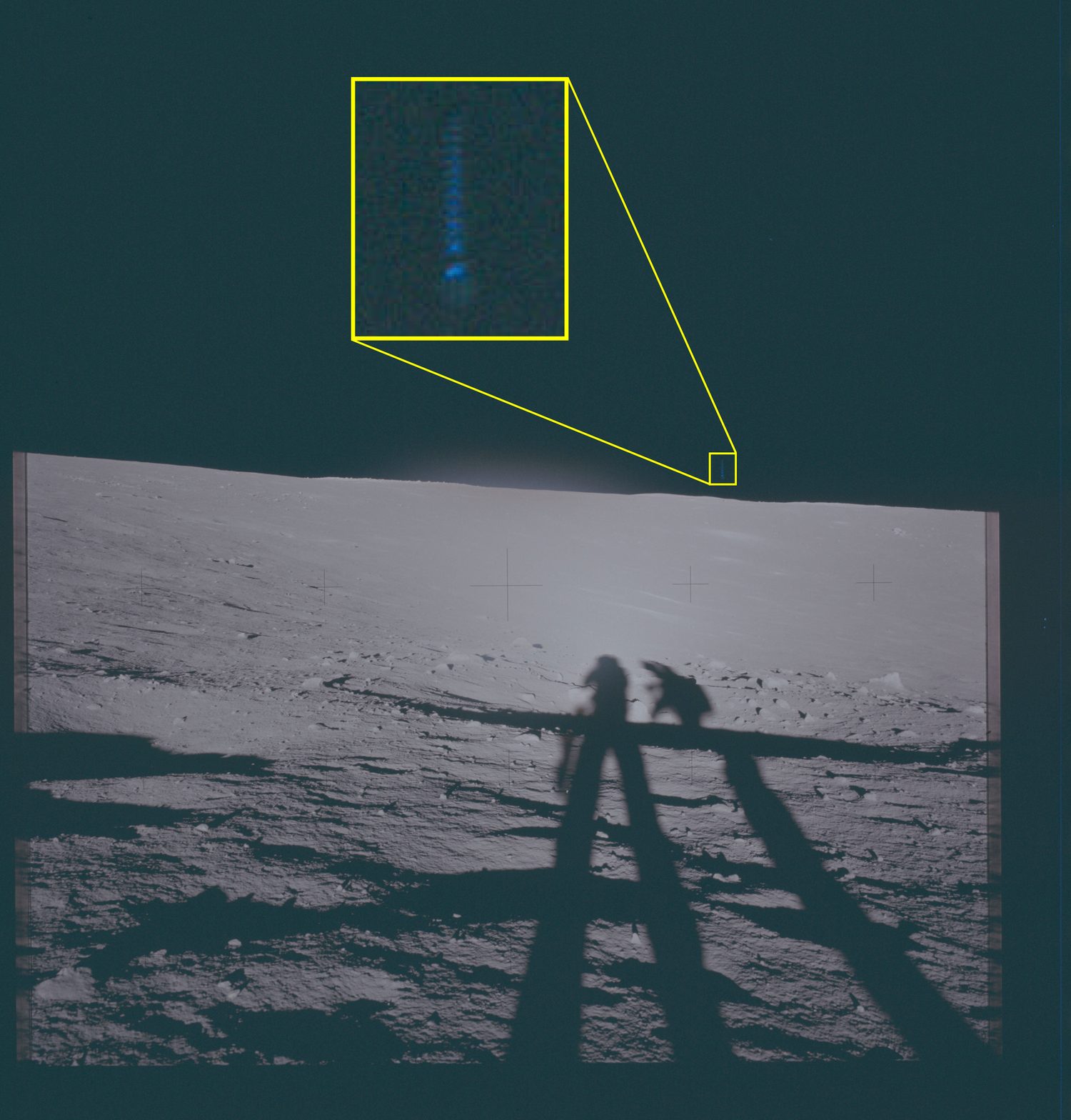
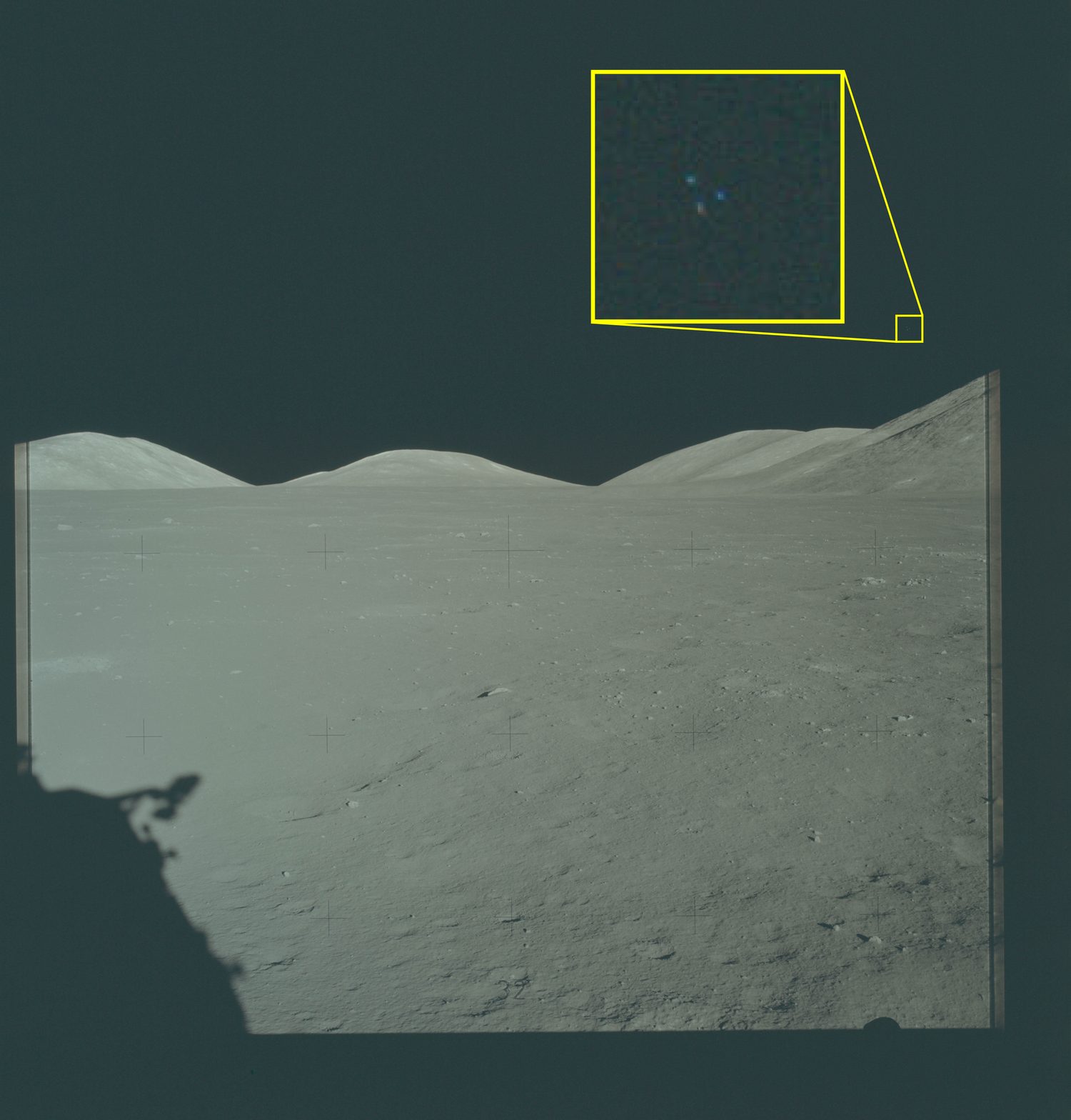
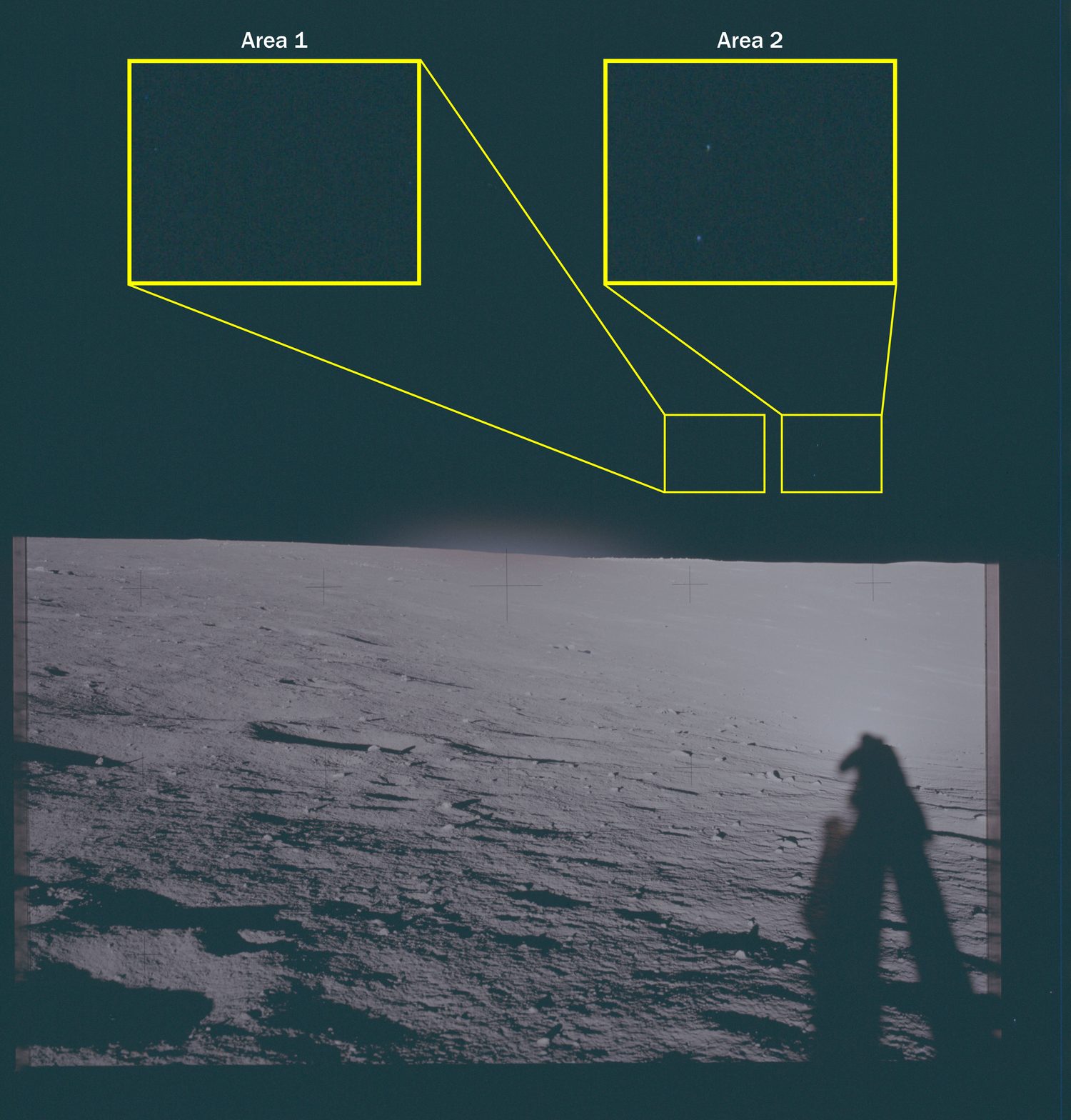
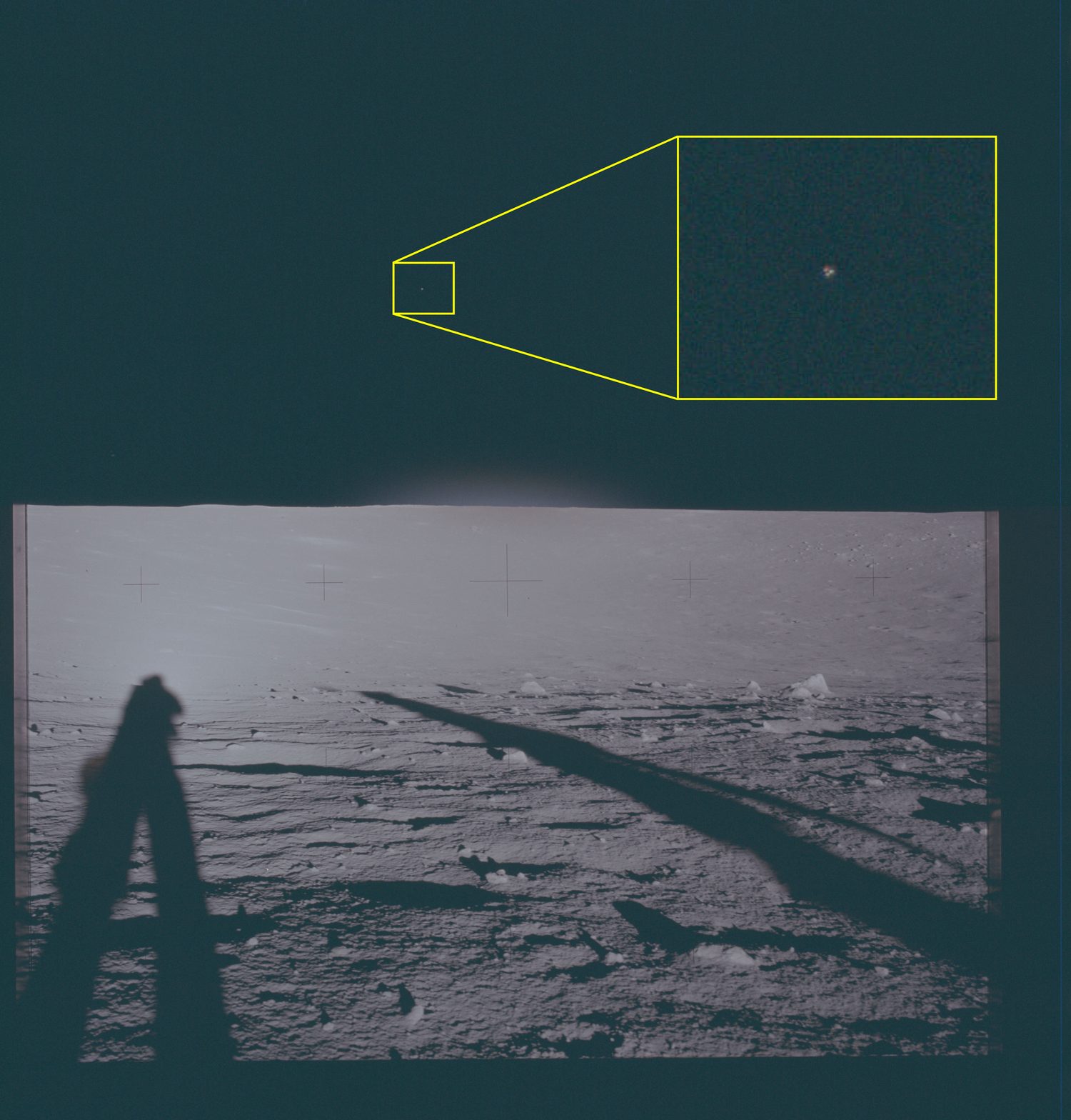
Apollo 12 mission photography, November 1969. The mission transcript (NASA-UAP-D1) documents LMP Bean's observation of light particles "escaping the Moon" at high speed, Houston attributed some to EMI; not all observations were explained. Full archive →
Not phenomena. These are irregularities in how the government catalogued and published the files, logged here because they are checkable, they affect what a reader can find, and in one case they are evidence about the shape of the collection.
Tranche 5 published FBI records D024 through D033, then jumped to D037. It published videos PR117 through PR127, then only PR134, PR136, PR142 and PR149 out of the block that runs to PR149. Three FD-302s and nineteen video numbers are missing from a sequence the government itself assigned.
A gap in record numbers on its own proves little. The VIRINs do more. Every document and image in the release carries one, issued by the release office as assets are prepared, and sorted they run contiguously — …-1139 through …-1153, covering CIA-D022 to FBI-D033 — and then skip exactly three slots, 1154, 1155 and 1156, before resuming at …-1157 for FBI-D037.
Three missing identifiers, three missing records, in the same position in both sequences. Those three FD-302s were not merely skipped in the numbering. They were prepared as release assets, given identifiers, and then not published. Whatever the reason, the published corpus is demonstrably a subset of a larger prepared holding.
A larger unexplained span sits at 1091–1138, between the Department of War documents and the CIA ones. Videos in this release carry DVIDS identifiers rather than VIRINs, so that block is not obviously the video set. It is logged as unexplained rather than interpreted.
CIA-UAP-D022 is catalogued as “Unidentified Flying Object Reported near Puerto Rico, 1965,” with an incident date of 2 February 1965. The incidents it describes took place on 16, 17, 18, 19 and 24 November 1964. February 1965 is the date of the CIA memorandum, not of the event. Anyone sorting the corpus chronologically will place this case a year late unless the field is corrected.
Tranche 1 contains DOS-UAP-D1 and DOS-UAP-D2, diplomatic cables from Papua New Guinea in 1985 and Kazakhstan in 1994. Tranche 5 issued DOS-UAP-D001 and DOS-UAP-D002 to two entirely different documents, both Brazilian cables from November 1963. The State Department numbering restarted. This site resolves the collision by suffixing the Tranche 5 pair, so all four records remain separately addressable.
The official database pairs related records to each other. Three of those pairings contain typographical errors: FBI-UAP-024 and FBI-UAP-027 are missing a letter, and DOW-UAP-PR-101 should be a document identifier rather than a video one. The consequence is visible on war.gov: the record cards for FBI-UAP-D025, D026 and D027 display no related media at all, which means a reader there cannot navigate between the Colorado Springs interview and the rendering drawn from it in either direction. Separately, the card interface caps related media at four items, so the Gulf of Oman intelligence report displays four of its six paired video clips. Both are corrected in this collection.
The full released record across eight agencies — each document tagged by the anomalies it documents, using the same taxonomy as the behaviors above. Filter by agency. For the complete searchable, sortable archive, see the PURSUE Corpus. Anomaly categories: K = Kinematics, M = Morphology, S = Sensor, N = Nuclear Proximity, B = Behavior, I = Institutional, Sp = Space.
| Document | Agency | Tr. | Date | Anomaly types | Core anomalous claim |
|---|
Tr. = Tranche. All 241 analysed documents across five tranches; every document ID links through to its full record. The core anomalous claim in each row is the corpus entry verbatim. The anomaly-type tags are derived by keyword match against the eight behaviours defined above, so treat them as a finding aid rather than as analysis; a dash means the record is image-only or yields no extractable text. Quality ratings for every document live in the PURSUE Corpus and the Evidence Database, where the full record is searchable and sortable.